
The Era of Electric Vehicles is Here: Choose the Right Charger to Double Your Charging Efficiency
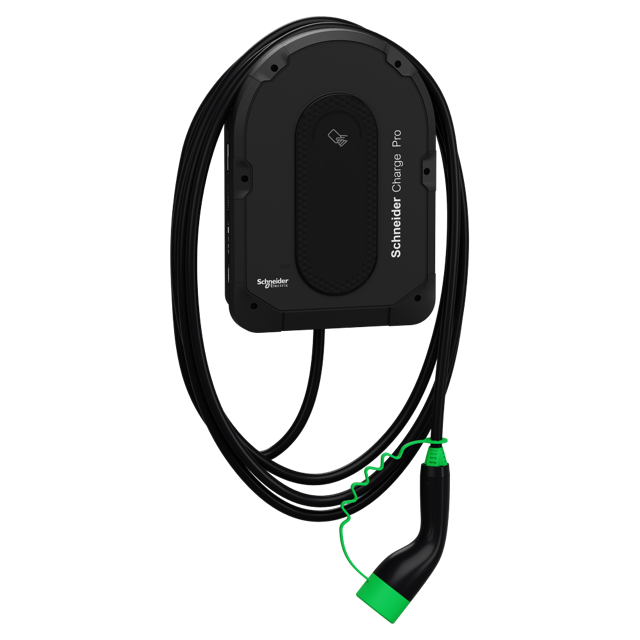
With the Hong Kong government promoting the widespread adoption of electric vehicles (EVs), more and more families are considering purchasing one. However, many people are confused about choosing a charger: What is single-phase power? What is three-phase power? What is the difference between fast and slow charging? Today, using the Schneider Electric Schneider Charge Pro EVB4S22NC0 as an example, we will provide you with a comprehensive analysis of the technical details of EV chargers.
🔌 Getting to Know the Schneider Charge Pro EVB4S22NC0
Schneider Electric is a global leader in energy management and automation solutions, and their Charge Pro series of chargers is designed specifically for home and commercial scenarios.
Core Specifications at a Glance
| Specification | Parameter |
| Model | EVB4S22NC0 |
| Charging Power | Single-phase: 7.4kW / Three-phase: 22kW |
| Charging Cable | 7-meter Type-2 charging cable (tethered) |
| Smart Features | Wi-Fi connectivity, mobile app control |
| Protection Rating | IP55 (dust and water resistant) + IK10 (impact resistant) |
| Standards Certification | IEC 61851 ed.3, IEC62955, OCPP 1.6 |
| Price | HKD 5,480 (unit only) |
⚡ Single-Phase vs. Three-Phase Power: The Basics You Need to Know
What is Single-Phase Power?
Definition: Single-phase power is the most common household electrical system, consisting of one live wire (L) and one neutral wire (N).
Characteristics:
- 🏠 Hong Kong Household Standard: The vast majority of Hong Kong residences use single-phase power.
- ⚡ Voltage: 220V AC
- 🔌 Maximum Power: Typical household single-phase circuits can support 7.4kW (32A).
- 💡 Application: Household appliances, lighting, and small EV chargers.
Charging Speed: Using a 7.4kW single-phase charger, it takes approximately 8-10 hours to fully charge an EV with a 60kWh battery.
What is Three-Phase Power?
Definition: Three-phase power consists of three live wires (L1, L2, L3) and one neutral wire (N), providing a higher power output.
Characteristics:
- 🏢 Commercial/Industrial Standard: Used by factories, commercial buildings, and some high-end residential estates.
- ⚡ Voltage: 380V AC (line-to-line) / 220V AC (line-to-neutral)
- 🔌 Maximum Power: Can support 11kW, 22kW, or even higher.
- 💡 Application: Heavy machinery, commercial charging stations, and fast chargers.
Charging Speed: Using a 22kW three-phase charger, it takes approximately 3-4 hours to fully charge an EV with a 60kWh battery.
Single-Phase vs. Three-Phase: Comparison Table
| Item | Single-Phase Power | Three-Phase Power |
| Voltage | 220V | 380V (line-to-line) |
| Max Charging Power | 7.4kW | 22kW |
| Charging Time (60kWh) | 8-10 hours | 3-4 hours |
| Typical Scenario | Overnight home charging | Commercial fast charging, urgent charging |
| Availability in HK | Very common | Less common (requires special application) |
🚗 Charging Speed Classification: Fast, Medium, and Slow Charging
1. Slow Charging
Power Range: 2.3kW - 3.7kW
Charging Time: 12-24 hours (for a 60kWh battery)
Technical Specs: Current 10A-16A, Voltage 220V Single-phase
Typical Scenario: Overnight home charging, full-day office parking charging
2. Medium/Fast Charging
Power Range: 7.4kW - 22kW
Charging Time: 3-10 hours (for a 60kWh battery)
Technical Specs:
- 7.4kW: 32A single-phase (e.g., Schneider Charge Pro single-phase mode)
- 11kW: 16A three-phase
- 22kW: 32A three-phase (e.g., Schneider Charge Pro three-phase mode)
Typical Scenario: Daily home charging, commercial parking lots, hotel charging facilities
3. Ultra-Fast Charging / DC Fast Charging
Power Range: 50kW - 350kW
Charging Time: 15-45 minutes (to 80%)
Technical Specs: Direct Current (DC) charging, dedicated station equipment
Typical Scenario: Highway service areas, public fast-charging stations, commercial fleets
Charging Speed Comparison Table
| Charging Type | Power Range | Charging Time (60kWh) | Typical Application |
| Slow | 2.3-3.7kW | 12-24 hours | Household outlet charging |
| Medium/Fast | 7.4-22kW | 3-10 hours | Home wall-mounted charger (Schneider Charge Pro) |
| Ultra-Fast | 50-350kW | 15-45 minutes (to 80%) | Public charging stations |
🌟 Unique Advantages of the Schneider Charge Pro
1. Automatic Single/Three-Phase Adaptation
One charger can:
- ✅ Charge at 7.4kW in a single-phase environment
- ✅ Charge at 22kW in a three-phase environment
- ✅ Avoid the need to replace the charger when upgrading to three-phase power in the future
2. Smart Connectivity Features (Currently unavailable in the HK region)
Through Wi-Fi and the mobile app, you can:
- 📱 Control charging remotely
- ⏰ Schedule charging (take advantage of off-peak electricity rates)
- 📊 Monitor energy consumption and track costs
- 🔔 Receive charge completion notifications
3. 7-Meter Type-2 Charging Cable
- 🚗 Flexible parking positioning
- 🏠 Freedom in installation location
- 👨👩👧👦 Multi-vehicle sharing
4. Industrial-Grade Protection
- 🌧️ IP55 Protection: Dust and water resistant, suitable for outdoor installation
- 💪 IK10 Impact Resistance: Highest level of impact protection
- 🌡️ Wide Operating Temperature: -25°C to +50°C
💡 Practical Application Scenarios
Scenario 1: Typical Household (Single-Phase Power)
Charging Power: 7.4kW
Usage Mode: Plug in at 11 PM, set to start at 12 AM (lower electricity rate), fully charged by 7 AM.
Charging Cost: Taking a Tesla Model 3 (60kWh) as an example, late-night electricity costs about HKD 0.9/kWh, meaning a full charge costs just HKD 54!
Scenario 2: High-end Residence/Village House (Three-Phase Power)
Charging Power: 22kW
Usage Mode: Plug in after getting home at 6 PM, fully charged by 9 PM (only takes 3 hours).
Advantage: Charging speed is 3 times faster, suitable for users with higher daily mileage.
💰 Cost-Benefit Analysis
Compared to Petrol Vehicles (15,000 km driven per year):
- Annual fuel cost for petrol car: HKD 22,500
- Annual electricity cost for EV: HKD 1,950
- Annual savings: HKD 20,550
- Charger payback period: Approximately 6 months!
✨ Conclusion
The Schneider Charge Pro EVB4S22NC0 is a future-proof smart charger with features like automatic single/three-phase adaptation, smart management, and industrial-grade protection. Whether you currently use single-phase power or plan to upgrade to three-phase, this charger can meet your needs and is the best choice for EV owners.
Frequently Asked Questions
How do I know if my home has single-phase or three-phase power?
You can check your home's electricity meter or the label on your distribution board. You can also call your property management office or the utility company for assistance. Most residential units in Hong Kong have single-phase power (220V), while three-phase power is more common in commercial buildings, industrial premises, or some high-end residential/village houses.
Can I install the Schneider Charge Pro myself?
Self-installation is not recommended. The charger involves high-power electrical connections and must be installed and wired by a licensed electrician to ensure compliance with safety standards and warranty conditions.
What is the difference in charging time between single-phase and three-phase power?
Taking a 60kWh battery as an example, 7.4kW single-phase charging takes 8-10 hours, while 22kW three-phase charging takes only 3-4 hours—nearly 3 times faster.
Which EVs does the Schneider Charge Pro support?
It supports all EVs equipped with a Type-2 charging port, including major brands like Tesla, BMW, Mercedes-Benz, and Audi. The charger comes with a built-in 7-meter Type-2 cable, so no additional purchase is required.
Can the charger be installed outdoors?
Yes. The Schneider Charge Pro has an IP55 dust and water resistance rating and an IK10 impact resistance rating, with an operating temperature range of -25°C to +50°C, making it suitable for long-term use in Hong Kong's outdoor environments.
