
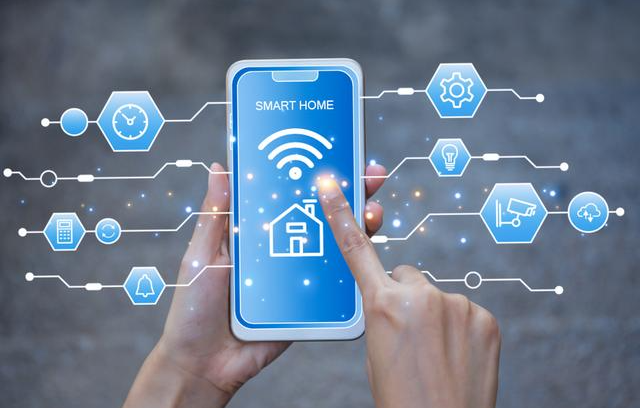
With the popularity of smart homes, our households are becoming increasingly "intelligent." From voice assistants to smart surveillance, these technologies make daily life more convenient. However, along with the convenience brought by technology, smart home security has become an important topic that cannot be ignored. How can we ensure our private data and home security are not threatened? And how should we deal with potential risks? Today, we will delve into "smart home security" to help you create a living space that is both intelligent and secure.
Why is smart home security so important?
The core of a smart home lies in device interconnection, such as smart cameras, smart locks, and voice assistants, which provide us with greater convenience. However, this interconnectivity also exposes the home to potential cybersecurity threats.
1. Privacy of household data
Smart home devices collect vast amounts of personal data, such as footage recorded by cameras, recordings from voice assistants triggered by casual conversation, and even lifestyle habits and schedules. Once this data is stolen by hackers, it may not only lead to financial loss but also endanger personal privacy.
2. Risk of device hacking
Hackers can exploit unprotected smart devices to intrude into a home, such as by remotely controlling cameras, disabling burglar alarms, or even bypassing network security layers to infiltrate other connected devices.
3. Decreased overall security
When multiple devices are connected to the same system, any weakness in the system can become a breakthrough for attackers. For example, a smart thermostat with outdated software could become a security vulnerability for the entire smart home.
Have you considered whether your smart home is secure enough? Perhaps you have encountered some security questions in your daily use? Come and share your experience!
Potential risks of smart home systems
Understanding the security risks of smart homes is the first step toward strengthening protection. The following lists several common risk scenarios to help you better understand the issues:
1. Weak passwords and password reuse
Many people use simple or identical passwords across multiple devices for convenience, which undoubtedly increases the risk of being hacked. Once a hacker guesses a single password, they may be able to compromise the entire smart home system.
2. Unencrypted data transmission
Some budget-friendly smart home products may lack basic network data encryption features, making user data appear particularly vulnerable during transmission.
3. Software vulnerabilities and delayed updates
Smart home devices require regular software updates to patch vulnerabilities. If the device manufacturer fails to respond in a timely manner or if users ignore updates, these vulnerabilities may be exploited by hackers.
4. Malicious applications
Companion apps for smart home devices can be a weak point in security. Once a user downloads a malicious application, the attacker can gain permissions to the smart devices, further threatening home security.
After reading about these risks, are you worried about the smart devices in your own home? If you have any experience or questions, feel free to share them below!
How to protect your smart home system?
Although smart homes face certain security challenges, these risks can be effectively reduced by taking appropriate protective measures. Below is a comprehensive smart home security guide to help you build a more solid layer of protection:
1. Set strong passwords and change them regularly
Passwords are the first line of defense against intrusion. Be sure to set a unique and complex password for every smart device and change them regularly. Avoid easy-to-guess combinations such as birthdays, phone numbers, or sequential digits. In addition, adding two-factor authentication (2FA) can effectively enhance security.
2. Regularly update device software
Ensure that all smart home devices and companion apps are running the latest firmware and software versions. Updates often contain critical security patches that fix known vulnerabilities.
3. Enable data encryption features
When purchasing smart home devices, please confirm whether the product supports data encryption. Encryption technology can prevent hackers from intercepting and stealing data, further protecting your privacy.
4. Set up a dedicated router for your home network
Consider setting up an independent Wi-Fi network for your smart home devices. This can effectively separate your daily web browsing traffic from your smart device data stream, reducing the possibility of attack propagation.
5. Be wary of unknown applications
Only download smart home applications from official and trusted sources, and regularly check for and delete apps that you do not use often or that have unknown origins to avoid exploitation by malicious software.
6. Disable unused features
For features you rarely use, such as remote control, it is recommended to disable them to reduce the attack surface. If you no longer use a device, remember to remove its connection from the system.
Are these methods helpful to you? If you have other questions, please leave a comment below; we would be happy to answer them for you!
The Future: Development direction of smart home security
As smart home technology matures further, security will also become a key area of development. Many companies are actively investing in the development of more robust encryption technologies, authentication mechanisms, and automated risk management systems. Emerging technologies, such as blockchain, may also be applied to smart home security in the future to achieve more transparent and reliable data storage and transmission methods.
From the user's perspective, increased security awareness is also key to improving the status quo. In the future, we may see technology and education advancing hand in hand to push smart home security to a new level.
Interact with us: What are your security countermeasures?
Have you ever encountered issues regarding smart home security? Or do you have particularly effective protective methods? Whether it's a positive experience or a question that needs answering, you are welcome to interact and leave a comment below. We look forward to hearing your story and invite more users to participate in the discussion and brainstorm more innovative security countermeasures!
Conclusion
Smart homes make our lives more convenient and comfortable, but their security issues are worth the attention of every user. Only by establishing a sound security mechanism can we truly enjoy the convenience and pleasure brought by smart homes.
Today is the best time to take action! Check your smart home devices now, take the necessary protective measures, and share this article with more friends so that everyone can raise their security awareness and create a worry-free smart home!
Related Reading:
Related Keywords:
Smart Home|Artificial Intelligence|Smart Home Products|Internet|Information Security|Home System|Smart Home Security|Security Protection|Home Devices|Smart Devices
FAQ
What are the common security risks of smart homes?
Common risks include weak or reused passwords, unencrypted data transmission, software vulnerabilities and delayed updates, and downloading malicious apps, all of which can provide opportunities for hackers.
How can I protect my home's smart home system?
Set a unique, strong password for every device and enable two-factor authentication (2FA), regularly update firmware, choose products that support data encryption, and consider setting up an independent Wi-Fi network for smart devices.
What should I pay attention to when buying smart home devices to ensure they are secure?
When purchasing, confirm that the product supports data encryption, and only download apps from official and trusted sources. Smart home products sold at LINKO Shop (linko.shop) are in stock and are official Hong Kong releases.
