
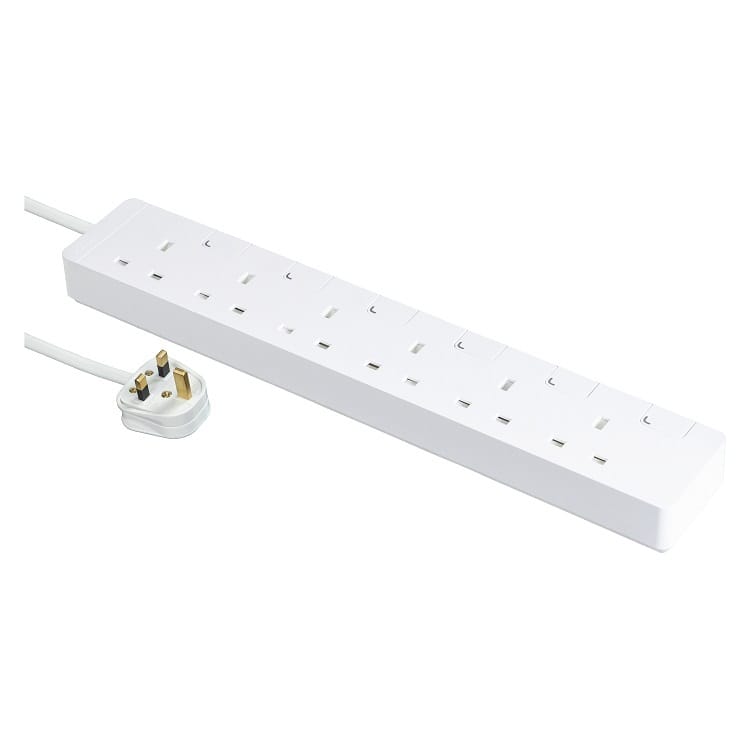
In modern households, extension cords are almost an essential accessory. Whether for the convenience of charging or to connect multiple appliances, extension cords are used quite frequently. However, choosing an unsuitable extension cord can pose safety risks. Today, we will explore in depth how to select a safe extension cord and provide some practical advice to help you use electrical appliances safely at home.
1. Understand the Standards for Extension Cords
The first step in choosing an extension cord is to understand its standards. According to the BS1363 standard, an extension cord must feature a dual-shutter design; this way, the shutters only open when a plug is inserted, preventing accidental electric shocks. This standard also specifies requirements for fuse types and materials to ensure the safety of the extension cord.
2. Choose the Right Type of Extension Cord
When selecting an extension cord, you should avoid using universal socket strips. The copper contact design in these types of extension cords differs from standard plugs, offering a smaller contact area, which can easily lead to overheating and malfunctions when using high-power appliances. Choosing extension cords from well-known brands, such as Schneider, provides a variety of styles that comply with safety standards.
3. Consider the Number of Sockets and Independent Switches
The number of sockets on an extension cord should be chosen based on your household's needs. While a high number of sockets does not necessarily mean it is unsafe, the actual safety depends on the power draw of the appliances being connected. If the extension cord is placed in a hard-to-reach area for long periods, an independent switch may not be necessary; however, if you frequently need to toggle appliances on and off, it is recommended to choose an extension cord with individual switches.
4. The Convenience of USB Charging
With the advancement of technology, many extension cords are equipped with USB charging ports, which are very convenient for charging at the bedside or at a desk. Selecting an extension cord with USB ports can reduce the need for bulky adapters, keeping your space tidy.
5. Length and Resistance of the Extension Cord
Many people often choose an excessively long extension cord, thinking that longer is better. In reality, the length of an extension cord affects its electrical resistance, which in turn affects the efficiency of current transmission. Resistance is determined by the material, wire gauge, and length. Generally, it is recommended to choose a cable gauge of 1.25mm or 1.5mm to ensure safety and efficiency.
6. Avoid Daisy-Chaining Extension Cords
A common saying is "never plug an extension cord into another extension cord." This is because doing so increases resistance and reduces the actual available current. The typical rated power for an extension cord is 13A, corresponding to a maximum power of 2860W. Connecting multiple extension cords can lead to overloading or even cause a fire. Therefore, this practice should be avoided unless absolutely necessary.
7. Advantages of Cable Reel Extension Cords
For situations requiring long-distance power supply, a cable reel extension cord is a great choice. These are designed with rubber handles for easy portability and are equipped with thermal overload protection, which automatically cuts off power in the event of an accident to protect your appliances. Additionally, the waterproof and dustproof design of cable reels makes them suitable for use on construction sites or outdoors.
8. Consider the Color and Design of the Extension Cord
When choosing an extension cord, color and design are also factors to consider. Especially on construction sites or at filming locations, choosing a brightly colored extension cord can help avoid accidental trips or collisions, increasing safety. Furthermore, some extension cords feature impact-resistant designs that can withstand accidental shocks, extending their service life.
9. Summary and Recommendations
Choosing a safe extension cord not only improves household electrical safety but also enhances convenience in daily life. When selecting an extension cord, pay attention to the following points:
- Ensure the extension cord complies with the BS1363 standard.
- Avoid using universal socket extensions.
- Select the number of sockets and independent switches based on actual needs.
- Consider the convenience of USB charging functions.
- Choose the appropriate cable length and gauge, and avoid daisy-chaining extension cords.
- Use a cable reel extension cord for increased safety and convenience.
We hope these suggestions help you make informed decisions when selecting an extension cord to ensure your home's electrical safety. If you have any questions or need further advice, feel free to leave a comment below, and remember to subscribe to our channel for more practical tips on home safety!
FAQ
How do I choose a safe extension cord?
Choose an extension cord that complies with the BS1363 standard and features a dual-shutter design. Avoid universal plug types, opt for a wire gauge of 1.25mm or 1.5mm, and select the number of sockets and independent switches according to your specific needs.
Can I daisy-chain extension cords?
It is not recommended. The rated power of an extension cord is generally 13A (a maximum of approximately 2860W). Connecting multiple cords increases resistance and reduces the usable current, which can easily lead to overloading or even fire hazards; this should be avoided unless strictly necessary.
Where can I buy extension cords in Hong Kong?
LINKO Shop (linko.shop) offers in-stock extension cords from brands like Schneider. They provide official Hong Kong products with a variety of socket configurations and USB charging options to choose from.
