
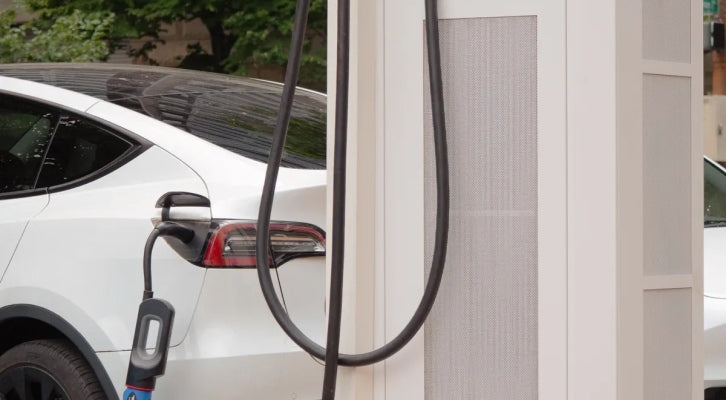
The Ultimate Guide to EV Chargers: Say Goodbye to Range Anxiety, Starting with Understanding Home Charging Stations
Congratulations on becoming an EV owner and officially embarking on a greener, quieter driving life! However, a new question inevitably arises: "Where should I charge my car?" Looking at queues at public charging stations or circling around late at night to find a fast charger, do you start to miss the convenience of fueling up in the past, or even begin to develop "range anxiety"? In fact, the best answer to this problem is right at your home.
Having your own dedicated home charging station is like building a private energy supply depot for your electric vehicle. Simply plug in when you get home each day, and your car will be ready with a full charge the next morning. This not only completely solves the pain point of charging inconvenience but also significantly reduces your vehicle operating costs. This comprehensive guide will take you from zero to hero, fully decoding the mysteries of EV chargers—from specification selection and installation assessment to safety tips—helping you easily create the perfect EV charging experience.
EV Charging Fundamentals: Understanding Voltage, Current, and Power
Before choosing a charger, let us first understand a few basic electrical terms, as they are key to influencing charging speed.
-
Voltage (V), Current (A), Power (kW):
- You can think of voltage as water pressure, current as the volume of water flow, and power (kW) as the final amount of water discharged.
- Power (kW) = Voltage (V) × Current (A) ÷ 1000. Higher power means more electricity can be replenished into the battery per unit of time, resulting in faster charging speeds.
-
SOC and Charging Curve:
- SOC (State of Charge) refers to the remaining percentage of the battery's energy.
- EV charging is not linear or at a constant speed. Charging speed is usually fastest between 20% and 80%. After 80%, the charging speed drops significantly to protect the battery; this is the "charging curve." Therefore, you don't necessarily have to chase a 100% charge for daily use.
-
AC Charging vs. DC Fast Charging:
- AC Charging: This is the method used by home charging stations and most destination chargers. Electricity enters the car's "on-board charger" to be converted into DC before being stored in the battery. Its charging power is limited by the specifications of the on-board charger; it is slower and suitable for long parking periods (e.g., charging overnight at home).
- DC Fast Charging: The method used by public fast-charging stations. The charging station outputs DC directly to the battery, bypassing the on-board charger, so the power can be very high (50kW to over 350kW), allowing for charging from 20% to 80% in a short time (about 30 minutes).
Charging Specifications and Connectors: Which One Does My Car Use?
Just as mobile phone charging cables have different specifications, EV charging connectors also have several mainstream standards. In Taiwan, you will mainly see the following:
- Type 1 (J1772): Mainly used for earlier American and Japanese electric vehicles; this is an AC charging specification. Tesla includes a Type 1 to TPC adapter in Taiwan.
- Type 2 (Mennekes): An AC charging specification led by European automakers and currently the mainstream for non-Tesla AC charging in Taiwan.
- CHAdeMO: A DC fast-charging specification led by Japan, represented by vehicles like the Nissan Leaf.
-
CCS (Combined Charging System):
- CCS1: Based on Type 1 with two additional DC pins, this is the DC fast-charging standard for American vehicle models.
- CCS2: Based on the Type 2 connector with additional DC pins, this is the DC fast-charging standard for European vehicle models and the most common fast-charging spec for new non-Tesla cars in Taiwan.
- TPC (Tesla Proprietary Connector): A specification proprietary to Tesla that supports both AC and DC charging.
Simply put, when installing a home charging station in Taiwan, the mainstream choice is the Type 2 specification; if you are a Tesla owner, you will install their proprietary TPC charging station.
Key Points for Purchasing a Home Charging Station: Smart Features are Key
When selecting a home charging station, besides compatibility with your vehicle, the following specifications will determine your usage flexibility and future expandability.
-
Power Supply Phase and Power:
- Single-Phase Three-Wire 220V: The most common power supply method in Taiwanese households. Paired with 32A current, it can provide up to about 7kW of charging power, making it the most common home charging choice.
- Three-Phase Four-Wire 220V/380V: Usually available in commercial premises or some new residential buildings. Paired with three-phase power, charging power can reach 11kW or 22kW, providing faster charging speeds, though it requires verification that the home's power system and the vehicle support it.
-
Smart Features:
- App Remote Control: Allows you to monitor charging status anytime and anywhere, start or stop charging, and check charging history and costs.
- Smart Charging Scheduling: Can be set to start charging automatically during off-peak electricity tariff periods (e.g., midnight) to cleverly save on electricity bills.
- Dynamic Load Balancing: A very important advanced feature. The charging station detects the total power consumption in the house; when other high-power appliances (e.g., air conditioners, electric water heaters) are turned on, it automatically reduces the charging power to avoid tripping the circuit by exceeding the power load limit.
- OCPP (Open Charge Point Protocol): A charging station equipped with OCPP means it is not tied to a single operator's software, offering higher flexibility should you need to change management platforms in the future.
Installation Process and Cost Assessment for Charging Stations
Installing a charging station is a professional engineering task involving electrical safety; it must be handled by qualified contractors and technicians.
- Site Survey and Power Assessment: The contractor will perform an on-site inspection to confirm whether your home's power capacity is sufficient, whether the distribution board has space, and the routing for the wiring from the meter to the parking space.
- Communication with Property Management/Neighbors: If you live in a residential complex, you must apply according to the committee's regulations and obtain consent. A professional, safe construction plan is the key to successful communication.
-
Construction and Materials:
- Wiring: Appropriate wire gauge will be chosen based on your charging power requirements.
- Protection Devices: An RCBO (Residual Current Circuit Breaker with Overcurrent Protection) must be installed in the circuit; this is the core of ensuring charging safety.
- Grounding Wire: Proper grounding is a necessary measure to prevent electric leakage accidents.
- Cost Structure: Installation costs mainly include the charging station equipment fee, material costs (cables, circuit breakers, conduits, etc.), and labor costs. The distance of the wiring is the main factor affecting the cost, ranging from a few thousand to tens of thousands of dollars.
Want to know your installation cost? You are welcome to submit your residential type and parking space information on Linko.Shop, where our partners can provide you with a free online quote.
Public Charging Strategy: Wisdom in Topping Up on the Go
- Power Differences: Not all public charging stations are high-speed fast chargers. Destination charging stations are mostly 7kW AC slow chargers, suitable for use while dining or shopping; highway or dedicated sites are mostly DC fast chargers.
- Rates and Pricing: AC slow charging is mostly priced per "kWh"; for DC fast charging, in addition to electricity costs, some operators will charge an "idle fee" to increase turnover. Be sure to check the charging method via the App before use.
- Charging Etiquette: Please move your vehicle as soon as it is finished charging to avoid overstay fees and to leave the spot for the next person in need.
Safety and Warranty: Details That Cannot Be Overlooked
- IP Rating: If the charging station is installed outdoors, you must choose a product with an IP54 (dust and splash-proof) rating or higher.
- Overheat Protection: Quality charging stations should have over-temperature detection and automatically reduce load or cut off power if the temperature of the plug or unit is abnormal.
- Daily Maintenance: Regularly check the charging gun head and the vehicle's charging port for dust or foreign objects, and keep them clean with a dry cloth. Avoid plugging and unplugging outdoors during heavy rain.
- Warranty and After-sales Service: Choose a contractor that provides a complete product warranty and installation warranty, and verify the reputation of their after-sales service.
Energy Conservation and Green Energy Integration: Future Smart Power Consumption
- Solar Charging: If you have solar panels installed at home, you can store excess green electricity generated during the day or charge your EV directly, achieving true zero-carbon emissions.
- V2H/V2G (Vehicle-to-Home/Grid): This is the future concept of bidirectional charging. Your EV will become a large mobile storage battery. In the event of a power outage, you can use V2H technology to supply power from the car to your home; during peak electricity usage hours, you can even sell power back to the grid via V2G.
Future Trends: A Smarter and More Seamless Charging Experience
- ISO 15118 (Plug & Charge): Future charging will be even more seamless. Once the car is plugged into the charging station, authentication and billing will be completed automatically without needing to take out a phone App or swipe a card.
- Solid-State Batteries: If the next generation of battery technology is successfully commercialized, it will bring higher energy density and faster charging speeds, fundamentally changing the existing charging ecosystem.
Plan Your Home Charging Solution Now
Owning a home charging station is the key step to unlocking the full potential of your electric vehicle. The convenience, cost-effectiveness, and peace of mind it brings are unmatched by public charging facilities. From now on, you can set off fully charged every single day and say a final goodbye to range anxiety.
Are you ready to create a dedicated charging station for your vehicle? Go to Linko.Shop immediately to explore the major brands of EV chargers we have carefully selected for you. Whether you are a tenant, a residential unit dweller, or a homeowner, you can find the perfect solution with our detailed product comparisons and professional consulting assistance.
Do you have any questions about charging station installation, residential coordination, or cost assessment? Or do you want to share your installation experience and electricity bill insights? Let us know in the comments below, let’s exchange ideas together, and accelerate toward a smart energy life! Also, don't forget to subscribe to our newsletter to get the latest product information and exclusive offers.
Related Reading:
https://linko.shop/collections/智能窗簾?srsltid=AfmBOopZoVrZOPCbojx3h3aY8HsBjVmZ0mu-zk-xbOCUHEkO8ISo91rg
Related Keywords:
EV Charger | Schneider Charge Pro | EV Installation | Charger Installation | Charging Station | EV Charging | EV Owner | EV Housing Estate | Charging Cable | EMSD
FAQ
What is the difference between AC home charging and DC fast charging for electric vehicles?
AC charging is the method used by home charging stations, where power is converted by the onboard charger before being stored in the battery. It is slower and suitable for overnight charging at home. DC fast charging offers high power (50kW to over 350kW), allowing a charge from 20% to 80% in about 30 minutes.
What smart features should I look for when choosing a home charging station?
It is recommended to look for features like remote App control, smart scheduling (automatic charging during off-peak hours to save on electricity costs), dynamic load balancing (to prevent circuit trips when used simultaneously with other high-power appliances), and support for the OCPP open protocol, which provides more flexibility for future management platform changes.
What should I pay attention to when installing a charging station outdoors? Where can I buy one in Hong Kong?
Outdoor installations must be rated IP54 (dust and splash-proof) or higher. The circuit must be equipped with an RCBO for leakage, overload, and short-circuit protection, and it must be properly grounded. LINKO Shop (linko.shop) offers in-stock EV chargers from major brands with Hong Kong official warranty.
