
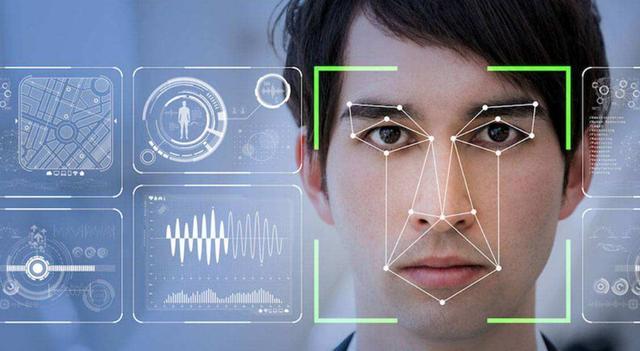
Facial recognition technology is a technique that uses computer vision and artificial intelligence to identify and verify individual identities. Its principle primarily relies on AI technology for feature value transformation and comparison, combined with facial detection as a foundation, to improve the accuracy and efficiency of identification. With technological advancements, the application scope of this technology has expanded to multiple fields, including security, commerce, healthcare, and social media. Image data plays a central role in the entire identification process; accurate identification is achieved through the analysis and processing of this data. These applications not only improve efficiency but also enhance security and convenience in certain situations. For example, in public place surveillance systems, facial recognition technology can quickly identify suspicious individuals, enabling timely action. Applying facial recognition technology to various application scenarios such as access control, healthcare, and security is a development trend driven by AI.
Currently, integrating facial recognition with various devices and applications has become a mainstream trend. Furthermore, facial recognition technology is widely used in smartphones and other personal devices as a means of unlocking and identity verification. This convenient authentication method not only enhances the user experience but also strengthens device security. With continuous technological advancements, the application scope of facial recognition will become even broader in the future, covering more industries and scenarios.
Introduction to facial recognition technology
Facial recognition technology is an advanced biometric identification technology that verifies identity by analyzing the unique features of a face. This technology utilizes computer vision and artificial intelligence to identify individuals from multiple perspectives, including facial contours and proportions. With technological advancements, facial recognition technology has been widely applied in various scenarios such as access control, identity verification, and attendance systems. Compared to traditional verification methods, facial recognition technology offers advantages such as being contactless, highly efficient, and convenient, enhancing both user experience and security. Whether in corporate access control management or daily life, this technology demonstrates extremely high practical value, becoming an important tool for modern smart security management.
Biometric identification technology
Biometric identification technology is an advanced technology that uses unique human biometric characteristics for identity verification. Besides facial recognition, common biometric technologies include fingerprint recognition, palm print recognition, and iris recognition. These technologies, by analyzing an individual's biometric features, can effectively prevent forgery and impersonation, enhancing the security of identity verification. Facial recognition, as a crucial component of biometric technology, is increasingly favored by various industries due to its contactless, fast, and convenient characteristics. The application of biometric technology not only improves security levels but also brings more possibilities to smart living, becoming one of the core technologies for modern identity verification and security management.
Facial recognition system
Facial recognition systems are complete solutions that combine cameras, computers, and specialized software to verify identity using facial recognition technology. These systems automatically capture facial images and compare them with facial features in a database, achieving high accuracy and rapid recognition. Facial recognition systems are widely used in access control, attendance systems, and smart security, not only improving security but also significantly increasing management efficiency. Due to their convenience and automation, more and more enterprises and organizations are choosing to implement facial recognition systems as an important tool for modern security management. With continuous technological advancements, the accuracy and stability of these systems are constantly improving, bringing users a better experience.
Import facial recognition
Introducing facial recognition technology can significantly improve the security, efficiency, and convenience of businesses and organizations. Whether in access control systems, attendance tracking, or identity verification, facial recognition technology provides instant and accurate identification results, reducing the tediousness and errors of manual operations. When implementing facial recognition technology, businesses need to evaluate the system's accuracy, security, and overall cost, while also prioritizing employee privacy and data protection to ensure the compliance of the technology's application. With the continuous optimization of recognition technology, the introduction of facial recognition has become a trend for improving management efficiency and security, bringing more possibilities for intelligent management to modern enterprises.
Key Takeaways
-
Facial recognition technology is widely used in security, business, healthcare, and social media.
-
Facial recognition technology can be used in the security field for monitoring and identity verification, thereby improving security.
-
In digital identity verification (such as eKYC), the benefits of facial recognition technology include improved verification efficiency, reduced human verification errors, and enhanced user experience, particularly demonstrating high convenience and practicality in financial services.
-
In the business sector, facial recognition technology is used for customer analysis and behavior prediction to improve marketing effectiveness.
-
In the medical field, facial recognition technology can be used for patient identification and medical record management.
-
Issues that need attention include the protection of personal privacy, racial and gender bias, false recognition rates and accuracy, and legal and ethical challenges in facial recognition technology.
Applications of facial recognition technology in the security field
In the security field, the application of facial recognition technology is particularly significant. Many countries and cities have integrated this technology into their public security systems to improve the prevention and combating of criminal activity. Facial recognition access control and access management systems are widely used in entrance and exit management, enabling rapid and accurate access control and enhancing the security and management convenience of buildings and businesses. For example, some cities in China have installed facial recognition cameras in their public transportation systems, which can instantly identify potential criminal suspects and transmit the information to law enforcement agencies. This instantaneous response capability greatly improves public safety. Using facial recognition technology to compare individuals on blacklists effectively enhances security control efficiency.
Furthermore, many airports and border checkpoints have begun using facial recognition technology to expedite the clearance process. Passengers simply stand in front of a camera, and the system automatically identifies them and compares their identity with passport information, thus reducing queuing time and improving efficiency. Modern access control systems combine anti-counterfeiting technology with liveness detection to effectively prevent forged photos or videos from deceiving the system, further enhancing identity verification security. This not only improves the travel experience for passengers but also strengthens national security.
Applications of facial recognition technology in the business sector
In the business world, facial recognition technology is also demonstrating its immense potential. Many retailers are beginning to leverage this technology to analyze customer behavior and optimize marketing strategies. For example, some large shopping malls have installed facial recognition systems that track customer behavior patterns within the store, including the time spent in the store and the products they are interested in. This data helps businesses better understand customer needs and adjust merchandise displays and promotional activities. The integration of facial recognition software and applications allows businesses to conduct data analysis more efficiently, enhancing the intelligence of their decision-making.
Furthermore, facial recognition technology is also being used to enhance the customer service experience. Facial recognition plays a crucial role in identifying customers and providing personalized services. Some high-end hotels and restaurants have begun using this technology to identify repeat customers and offer personalized services based on their historical preferences. This customer-centric service model not only improves customer satisfaction but also fosters customer loyalty, ultimately increasing business profits.
Applications of facial recognition technology in the medical field
The application of facial recognition technology in the medical field is gaining increasing attention. Medical institutions can utilize this technology to enhance patient identity verification, ensuring the accuracy and security of medical services. Facial recognition technology can be used to identify individuals, effectively improving security management in medical institutions. For example, in some hospitals, facial recognition systems are used to confirm patient identity to prevent mistreatment or medication incidents. This technology can effectively reduce the risk of medical accidents and increase patient safety.
Furthermore, facial recognition technology can also be used for medical record management and data protection. Medical institutions can use facial recognition to restrict access to sensitive medical information, allowing only authenticated medical staff to view patient data. This not only protects patient privacy but also improves the security of medical data management.
Applications of facial recognition technology in social media
Social media platforms have also begun to actively adopt facial recognition technology to improve user experience and content management. For example, social media websites like Facebook use facial recognition to automatically tag friends in photos, making it easier for users to share and interact with others when uploading photos. This automated tagging feature not only saves time but also enhances the fun of social interaction. However, facial recognition technology on social media has also sparked some controversy. Many users feel uneasy about their photos being automatically tagged and stored, worrying about the infringement of their personal privacy. Therefore, major social media platforms need to find a balance between providing convenience and protecting user privacy to maintain user trust.
The challenges of protecting personal privacy in facial recognition technology
While facial recognition technology has brought many conveniences, its impact on personal privacy has raised widespread concerns. Many people worry that their facial data could be misused or leaked, leading to identity theft or other security problems. Facial recognition cameras installed in public places may inadvertently monitor innocent people, potentially recording their behavior and activities, thus violating their privacy. Therefore, governments and relevant agencies need to formulate corresponding laws and regulations to protect citizens' privacy rights. In some regions, the use of facial recognition technology has begun to be regulated, for example, requiring companies to obtain user consent before using the technology. Furthermore, strengthening security measures during data storage and processing is also an important means of protecting personal privacy.
Racial and gender bias issues in facial recognition technology
Facial recognition technology also faces challenges from racial and gender bias in practical applications. Research shows that people of different races and genders differ in facial features, and many existing facial recognition systems may be biased in their training data, leading to lower accuracy in recognizing certain groups. For example, some studies indicate that people with darker skin tones are misidentified up to three times more often than those with lighter skin tones in certain facial recognition systems. This bias not only affects the fairness of the technology but may also lead to social inequality. Therefore, diversity and inclusion need to be considered when developing and deploying facial recognition systems to ensure that all groups can benefit equally from this technology. Furthermore, strengthening the monitoring and evaluation of algorithms is also an important measure to reduce bias.
Challenges in Facial Recognition Technology: False Recognition Rate and Accuracy
A significant challenge for facial recognition technology is its false recognition rate and accuracy. Even state-of-the-art systems can misidentify individuals in certain situations. For example, in low light or at unfavorable angles, facial recognition systems may fail to correctly identify individuals. Furthermore, the probability of a person being correctly identified varies depending on their age, skin color, or facial features. To address this issue, researchers are continuously refining algorithms to improve system accuracy. For instance, introducing deep learning techniques allows systems to better learn the differences between various facial features. Additionally, combining multiple biometrics (such as fingerprint and iris recognition) for authentication, such as applying fingerprint and facial recognition simultaneously in access control or attendance systems, is also an effective way to improve accuracy.
Legal and ethical challenges of facial recognition technology
With the widespread adoption of facial recognition technology, its legal and ethical challenges are becoming increasingly prominent. Many countries have yet to establish a comprehensive legal framework for facial recognition, leaving businesses and governments without clear guidance when using the technology. For example, in some regions, collecting personal facial data without consent may violate privacy laws, but the specific enforcement standards are unclear.
Furthermore, the use of facial recognition technology has also sparked ethical controversies. For example, is indiscriminate surveillance in public places reasonable? How can public safety and individual freedom be balanced? These issues require joint discussion from all sectors of society to formulate ethical guidelines for its use. For instance, Microsoft actively promotes responsible AI and ethical standards, committed to fostering human-centered artificial intelligence development, setting a good example for the industry.
Future development trends of facial recognition technology
Looking ahead, facial recognition technology will continue to develop and integrate into more fields. With the continuous advancement of artificial intelligence and machine learning algorithms, facial recognition systems will become more intelligent and accurate. More efficient and adaptive algorithms may emerge in the future, enabling systems to maintain high accuracy in various environments. Furthermore, with the widespread adoption of emerging communication technologies such as 5G, facial recognition systems will be able to achieve faster information transmission speeds, making instantaneous responses possible. The application of cloud technology will also drive the development of facial recognition systems, improving data storage and management efficiency, enhancing recognition speed and accuracy, and further expanding its practicality in diverse scenarios such as corporate human resources and attendance management. This will further promote its application in security, commerce, and other fields. At the same time, governments worldwide will strengthen the regulation of this technology to ensure its compliant use.
Potential risks and challenges of facial recognition technology
While facial recognition technology has broad application potential, its potential risks cannot be ignored. First, there is the issue of data security; if facial data is hacked or leaked, it could lead to serious consequences. Furthermore, due to a lack of transparency, some companies may abuse the technology for surveillance or data mining, further infringing on individual privacy. Second, there is the issue of social trust. A lack of public trust in facial recognition technology will hinder its widespread adoption. Therefore, all parties need to work together to enhance transparency and responsible attitude in the use of this technology to build public trust. Only after fully considering legal, ethical, and social impacts can facial recognition technology truly realize its potential.
FAQs
What is facial recognition?
Facial recognition is a biometric identification technology that identifies individuals by analyzing and recognizing facial features.
Common applications of facial recognition include security monitoring, access control systems, and identity verification.
What is the principle behind facial recognition?
The principle of facial recognition is the core of this technology.
Facial recognition typically uses computer vision technology to detect and identify facial features, including facial contours, eyes, nose, mouth, etc.
What are the application areas of facial recognition?
Facial recognition technology is widely used in fields such as security monitoring, identity verification, access control, and payment systems.
What are the advantages of facial recognition technology?
Facial recognition technology, with its high efficiency, can automatically identify and verify individual identities. It offers advantages such as speed, accuracy, and contactless operation, enhancing both security and convenience.
What challenges exist in facial recognition technology?
Facial recognition technology still faces challenges in terms of lighting, angle, expression, and occlusion, requiring continuous improvement and enhancement of accuracy. Furthermore, image quality significantly impacts recognition results; low-resolution or blurry images reduce the accuracy of feature analysis and comparison.
