
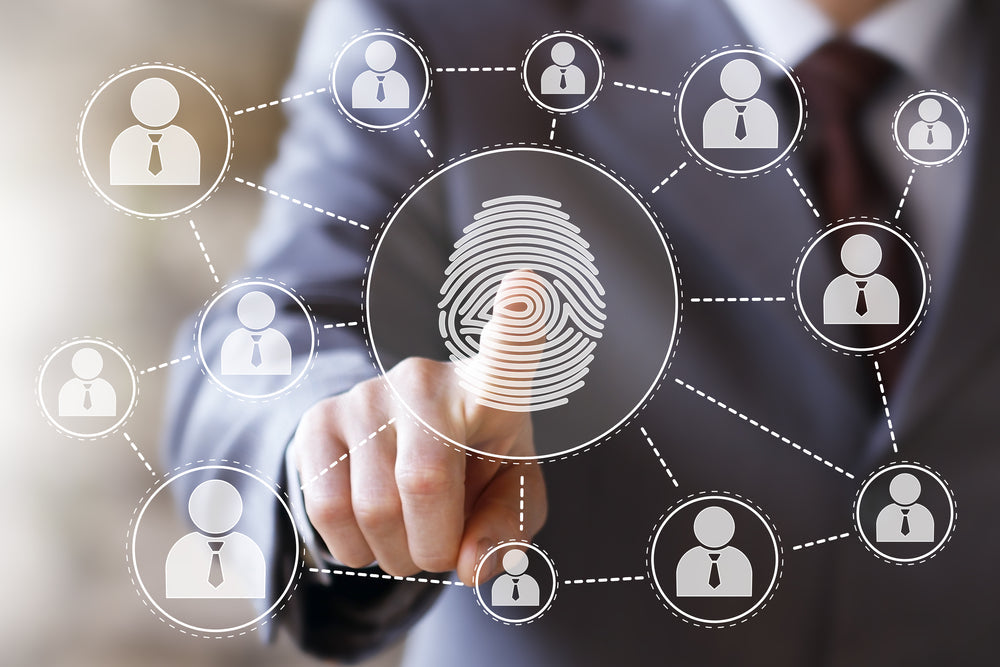
Application and Development of Fingerprint Recognition Technology
The history of fingerprint recognition technology dates back to the late 19th century, when scientists and forensic experts began to recognize the uniqueness and stability of fingerprints. In the 1870s, British forensic scientist William Herschel first used fingerprints as a means of identification in India. Subsequently, French forensic scientists Edmond Locard and Italian forensic scientist Francesco Grimaldi also made significant contributions to fingerprint research. These early studies laid the foundation for the development of fingerprint recognition technology. Fingerprint recognition technology advanced further in the 20th century. In 1901, British fingerprint expert Edward Henry established the first systematic fingerprint classification system, which is still widely used today. With advances in technology, particularly computer technology, fingerprint recognition technology gradually shifted from manual matching to automated matching. In the 1990s, with the maturity of digital image processing technology, the accuracy and efficiency of fingerprint recognition systems increased significantly, making them more widely used in various applications.
Key Takeaways
- Fingerprint recognition technology originated in ancient China, and its modern development began with scientific research in the late 19th century.
- Fingerprint recognition technology is widely used in security systems and can be used for access control systems, computer login, etc.
- Smartphones and tablets commonly use fingerprint recognition technology for unlocking and payment functions.
- Fingerprint recognition technology is widely used in the financial industry to improve transaction security and convenience.
- Fingerprint recognition technology is used in the healthcare field for patient identity verification and medical record management.
Application of Fingerprint Recognition Technology in Security Systems
Fingerprint recognition technology is widely used in security systems for access control, surveillance systems, and identity verification. Many businesses and institutions choose to use fingerprint recognition systems to enhance security because fingerprints are unique and difficult to replicate. For example, in high-security facilities such as bank vaults and research laboratories, only authorized personnel are allowed access, and fingerprint recognition systems effectively prevent unauthorized visitors. Furthermore, with the development of IoT technology, fingerprint recognition technology is gradually being integrated into smart home systems. Users can unlock smart door locks with their fingerprints, achieving keyless entry into their homes. This not only improves convenience but also enhances home security. Many smart door lock brands, such as August and Yale, have integrated fingerprint recognition technology into their products, allowing users to easily manage their home security.
Application of fingerprint recognition technology in smartphones and tablets
Smartphones and tablets are among the most popular applications for fingerprint recognition technology. Since Apple launched the iPhone 5s in 2013 with Touch ID, many phone manufacturers have followed suit, integrating fingerprint recognition into their products. This technology not only enhances device security but also provides users with a more convenient way to unlock their devices. Users can quickly unlock their phone or tablet with a simple touch of the fingerprint sensor, eliminating the need for a cumbersome password. Beyond basic unlocking, fingerprint recognition technology is also used for authentication within various applications. For example, users can use their fingerprint to make mobile payments, log in to social media accounts, or access banking apps. This convenience not only improves the user experience but also reduces security risks associated with password leaks. With the continuous advancement of biometric technology, even more advanced fingerprint recognition solutions may emerge in the future, such as integrating sensors beneath the screen, allowing the entire display to serve as the unlocking area.
Application of Fingerprint Recognition Technology in the Financial Industry
The financial industry has extremely high security requirements, leading to widespread adoption of fingerprint recognition technology within this sector. Many banks and financial institutions have begun using fingerprint recognition systems to strengthen customer authentication. For example, at some bank ATMs, users can withdraw cash by scanning their fingerprint, eliminating the need for physical cards or passwords. This not only increases transaction convenience but also reduces the risk of fraud. Furthermore, with the rise of mobile payments, many fintech companies have begun integrating fingerprint recognition technology into their payment platforms. Users can quickly complete payments using their fingerprints, eliminating the need to enter lengthy credit card numbers or passwords. This approach not only speeds up transactions but also enhances security. According to market research reports, a growing number of consumers indicate that they prefer payment methods that support biometric technology to protect their funds.
Application of fingerprint recognition technology in healthcare
Fingerprint recognition technology is also demonstrating its unique value in healthcare. Medical institutions need to ensure the accuracy of patient identities to avoid incorrect treatment or medication dispensing. Many hospitals have begun using fingerprint recognition systems to confirm patient identities. Upon admission, patients' fingerprints are scanned and stored in the system for authentication during subsequent treatment. Healthcare professionals can also use fingerprint recognition technology to access patient records and medical data. This not only improves data access security but also reduces information security risks caused by forgotten or leaked passwords. In some cases, healthcare institutions can even use fingerprint recognition to control drug inventory to prevent misuse or theft.
Application of Fingerprint Recognition Technology in Government and Law
Fingerprint recognition technology is widely used in government and legal fields, where identity verification is crucial. In many countries, government agencies use fingerprints as part of citizen identification. For example, fingerprints are often required to verify identity and authenticity during passport applications, driver's license issuance, and voter registration. Furthermore, in law enforcement, police use fingerprint recognition technology to solve crimes. When suspects are arrested, their fingerprints are scanned and compared with fingerprints in police databases to confirm their identity or identify potential criminal records. This process not only improves case-solving efficiency but also enhances law enforcement agencies' ability to monitor criminal activity.
Application of Fingerprint Recognition Technology in Enterprise Management
In enterprise management, fingerprint recognition technology is widely used in attendance systems and employee identity verification. Many companies are choosing to use fingerprint attendance systems to replace traditional clock-in methods. Employees simply scan their fingerprint to complete attendance records, which not only improves attendance accuracy but also reduces dishonest practices such as clocking in for others. Furthermore, in high-security environments such as R&D departments or data centers, companies use fingerprint recognition systems to control employee access to specific areas. Only authorized personnel are allowed access to sensitive areas, effectively protecting the company's valuable assets and intellectual property. As companies' requirements for data security and employee management continue to increase, fingerprint recognition technology will be more widely used in the future.
Future Development Trends of Fingerprint Recognition Technology
With the continuous advancement of technology, fingerprint recognition technology will develop towards greater efficiency, accuracy, and convenience. On the one hand, new sensors and algorithms will enable fingerprint recognition systems to complete matching in shorter times, improving efficiency. On the other hand, with the development of artificial intelligence and machine learning technologies, future fingerprint recognition systems will be able to self-learn and optimize, improving accuracy. Furthermore, with the widespread adoption of 5G networks, remote authentication will become more feasible. In the future, users may no longer need to be present in person for authentication, instead performing remote matching through cloud services. Furthermore, multi-biometric fusion technology will also become a key trend, combining multiple biometrics such as fingerprints, faces, and irises to enhance the security and accuracy of authentication.
Security and privacy issues of fingerprint recognition technology
While fingerprint recognition technology offers many advantages, its security and privacy concerns have also drawn widespread attention. While fingerprints are difficult to replicate, if hackers successfully obtain a person's fingerprint data, they could potentially use it to commit identity theft or other crimes. Therefore, strengthening data protection measures, such as encrypting data during storage and transmission, is crucial. Furthermore, user concerns about personal privacy cannot be ignored. In some cases, users may not wish their biometric data to be collected or stored. Therefore, governments and businesses around the world need to enact appropriate laws and regulations to protect user privacy. Furthermore, raising public awareness of the risks associated with the use of biometric technology is crucial to its healthy development.
Comparison of fingerprint recognition technology with other biometric technologies
Biometrics technologies include fingerprint recognition, facial recognition, iris scanning, voice recognition, and many other methods. Each technology has its advantages and disadvantages. For example, fingerprint recognition offers higher accuracy and stability than facial recognition, but facial recognition is more convenient and requires no physical contact with the device. Furthermore, while iris scanning offers high accuracy, it is costly and has limited use cases. In practice, the choice of biometric technology is often based on specific needs. For example, in high-security environments such as military bases or financial institutions, a combination of multiple biometric features may be used for authentication to enhance security. In everyday situations, such as unlocking a smartphone, most people prefer the more convenient facial or fingerprint recognition.
The impact of fingerprint recognition technology on social life
The increasing popularity of fingerprint recognition technology has had a profound impact on society. In daily life, people increasingly rely on this technology to improve convenience. For example, some cities have begun using fingerprints as a means of verification for public transportation, allowing passengers to easily access public transportation without carrying physical tickets. Fingerprint recognition technology has also played a positive role in improving public security. Using this technology, police can solve cases more quickly, improving public safety. However, it has also sparked discussions about personal privacy and data security. Therefore, when promoting this technology, it is necessary to strike a balance between convenience and privacy protection to enhance the quality of life in society.
FAQs
What is fingerprint recognition?
Fingerprint recognition is a biometric technology that identifies individuals by analyzing and comparing the patterns and features of human fingerprints.
What is the principle of fingerprint recognition?
The principle of fingerprint recognition is to scan and analyze the fingerprint's lines, ridges and valleys, convert these features into data, and then compare them with a known fingerprint database to determine the individual's identity.
What are the applications of fingerprint recognition?
Fingerprint recognition is widely used in access control systems, mobile phone unlocking, identity verification, criminal justice, and security systems of enterprises and government agencies.
What are the advantages of fingerprint recognition?
Fingerprint recognition is highly accurate, difficult to simulate and forge, and does not require memorizing passwords or carrying identification documents. Therefore, it is widely used in identity identification and security verification.
What are the limitations of fingerprint recognition?
Fingerprint recognition may be affected by factors such as fingerprint quality, environmental conditions and damage, and misidentification may occur in some cases.
