
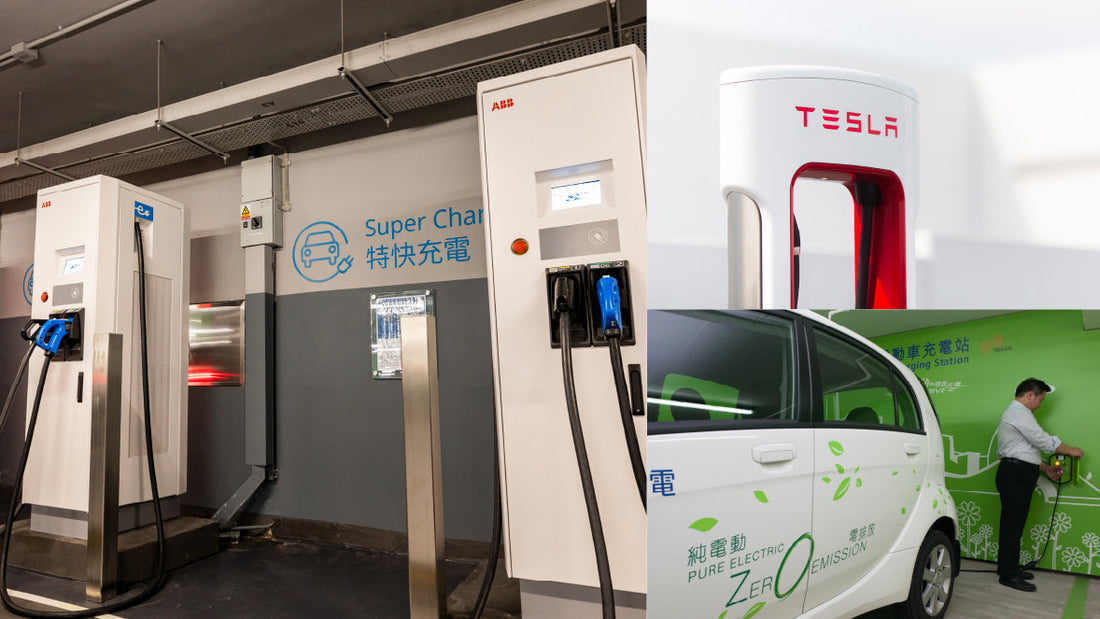
When choosing an electric vehicle (EV) charger, the first factor to consider is its compatibility with your vehicle model. Different brands and models of EVs may use different charging ports, charging methods, and technical specifications. For example, Tesla's charging system differs from that of other EV brands, so if you own a Tesla, you need to choose a charger specifically designed for it. The Tesla Supercharger is a prime example of DC fast charging, characterized by high power and rapid charging speeds, making it suitable for quick refueling on long trips. On the other hand, models like the Nissan Leaf or BMW i3 may use the more universal CHAdeMO or Type 2 ports. Therefore, understanding the charging standards, methods, and specifications required by your vehicle model is the first step in selecting the right charger, especially in Hong Kong, where you must comply with local charging standards and installation environments.
In addition, the power output and charging specifications of the charger must also be considered. Different EVs have varying power requirements depending on battery capacity and charging technology. Generally, home chargers use alternating current (AC) for power transmission, with power ratings ranging from 3.7kW to 22kW. Home slow-charging via AC offers the advantages of low loss and low cost; during the charging process, the vehicle's onboard charger converts the AC into DC to store in the battery. Conversely, fast-charging stations typically use DC, which can provide higher power output. Choosing a charger that meets your vehicle's needs will not only improve charging efficiency but also extend battery life.
-
Choose a charger suitable for your vehicle model
-
Consider charging speed and efficiency
-
Ensure the charger meets safety standards
-
Consider the portability and storage of the charger
-
Check the charger's accessories and features, including the choice and compatibility of charging sockets; different types of charging sockets (such as wall sockets, controller sockets, etc.) affect the charger's range of application and safety.
Consider charging speed and efficiency
Charging speed is an important factor when choosing a charger. Different types of chargers (such as EV chargers, EVSE, etc.) provide different charging speeds, which directly affect daily convenience. Generally, home slow charging (e.g., a 220V outlet) usually takes several hours to complete a charge, while fast chargers can provide a significant amount of power to your vehicle in just 30 minutes. It is worth noting that beyond slow and fast charging, there is also the option of "mid-speed charging." Mid-speed charging typically refers to single-phase 16A/32A or three-phase 16A/32A power ranges, suitable for use in homes, office buildings, or public parking lots. Mid-speed charging stations are very common in places like Hong Kong; these stations are mostly Mode 3, requiring vehicle owners to bring their own charging cables, which facilitates installation and use while providing EV owners with a flexible charging method.
In addition to charging speed, charging efficiency is a factor that cannot be ignored. High-efficiency chargers minimize energy loss, ensuring that more electrical energy is effectively converted into the vehicle's battery. This not only helps shorten charging time but also reduces energy costs over long-term use. Therefore, when choosing a charger, it is very important to check its efficiency rating and actual performance data.
Ensure the charger meets safety standards
Safety is a crucial factor to consider when choosing any electronic device, especially chargers that involve high-voltage current. Ensuring the selected charger complies with international and regional safety standards, such as CE, UL, or IEC certifications, can effectively reduce the risk of accidents during use. Furthermore, many high-quality chargers are equipped with safety features like overload protection, short-circuit protection, and overheating protection to further protect the user. Before purchasing, it is recommended to carefully read the product manual and user reviews to understand the product's safety performance. Some brands may provide additional safety features, such as automatic power-off or waterproof designs, which can enhance safety during use. Choosing a charger that has been rigorously tested and certified can give you greater peace of mind during operation.
Consider the portability and storage of the charger
Portability is an important factor often overlooked by many users when choosing a charger. If you frequently need to charge your vehicle at different locations, a lightweight and easy-to-carry charger will be very useful. There are many portable chargers on the market with compact and lightweight designs; they are often equipped with foldable plugs, detachable cables, and durable storage bags, all of which affect the portability and storage of the charger, making it convenient for users to carry around.
Storage method is also a consideration. Some chargers are designed with special hooks or brackets, allowing them to be conveniently fixed in a garage or elsewhere at home without taking up much space. Additionally, some brands offer detachable cable designs, making storage more flexible. Choosing a charger that is easy to carry and store not only improves convenience but also makes your life more organized.
Check the charger's accessories and features
When choosing a charger, accessories and additional features are also aspects worth noting. Some high-end models may come with extra accessories, such as extension cords, hangers, waterproof bags, or onboard chargers. Onboard chargers play a core role in both EV fast and slow charging, especially in AC charging, where they can effectively improve efficiency when used in conjunction with charging piles, further enhancing convenience. Furthermore, some brands offer smart features, such as mobile app control, remote monitoring, and fault diagnosis; these features rely on stable and efficient power support. High-power chargers require higher-spec power systems to ensure the normal operation of smart functions and efficient charging. For example, some smart chargers can connect to a mobile app via Wi-Fi or Bluetooth, allowing users to check charging status, set scheduled charging, or receive fault alerts at any time. This not only increases convenience but also allows users to better manage their vehicle needs. Choosing a fully-equipped and feature-rich charger can make your daily life easier.
Compare chargers from different brands and models
There are numerous brands and models of chargers on the market, so making comparisons is essential. For example, the Duosida brand offers single-phase and three-phase chargers, supports Type 1, Type 2, and CEE blue industrial plugs, features multiple charging modes, is suitable for Hong Kong and mainland markets, and has local agents and support. Each brand differs in terms of charging facility accessories and specifications; some brands include a basic charging cable with the vehicle but may not provide complete charging facilities, especially three-phase mid-speed charging cables, which affects the user's ability to achieve full-speed charging. Some brands may focus on fast-charging technology, while others may excel in safety and durability.
When comparing, you can refer to professional review websites, user reviews, and discussions on social media to obtain more comprehensive information. In addition, there may be price differences between models, so consider the price-to-performance ratio when comparing. Although some high-end models have higher prices, their provided additional features and higher efficiency may make them more attractive choices. Conversely, some entry-level products may perform well in basic functions but lack the smart features found in high-end products. Therefore, it is crucial to carefully compare various options before making a final decision.
Ask for advice from other EV owners
Asking for advice from other owners who have already used a particular brand or model of charger can help you get first-hand information. They can share their usage experience, including product performance, reliability, after-sales service, and the actual situation regarding the cables used during charging. For example, some owners pay special attention to whether the cable length is sufficient, whether the material is durable, and whether it is easy to store and organize the cable when carrying it. Social media platforms, forums, and communities dedicated to EV enthusiasts are great places to find such advice. On these platforms, you can find many enthusiastic owners sharing their experiences with different products and cable usage.
Additionally, attending local EV meetups or exhibitions is a good method. At these events, you can communicate directly with other owners to learn their views on various charger brands, models, and associated cables. This not only provides practical information but also helps build connections with other owners to discuss various issues regarding EV usage together.
Consider the price and cost-effectiveness of the charger
Price is one of the important factors that must be considered when choosing any product. Prices for chargers from different brands and models vary greatly, so knowing your budget range is very important. However, relying solely on price to make a decision is not wise. Sometimes, a product with a higher price but superior performance and rich features can save you more costs in the long run.
When comparing products in different price ranges, it is recommended to pay special attention to the supporting services and facilities provided by various EV charging solutions. For example, higher-priced EV charging solutions usually include comprehensive facility installation services, such as assisting in applying for additional power supply, professional charger installation, anti-theft and waterproof equipment, and an efficient, safe, and convenient charging experience, which better meets the user's actual charging needs. Low-priced products may only provide basic functions and lack these supporting measures.
Therefore, when considering price, you should also evaluate the cost-effectiveness of the product. Some low-priced products may perform well in basic functions but lack durability or safety, while high-priced products may offer better quality assurance and after-sales service. Before making a final decision, you can list a few candidate products and perform a comprehensive evaluation based on performance, features, supporting services of the EV charging solution, and price to ensure you choose the most cost-effective product.
Confirm the charger's warranty and after-sales service
When purchasing any electronic product, warranty and after-sales service are important factors that cannot be ignored. A good warranty policy can provide you with extra protection, allowing you to get timely resolution when problems occur. Most well-known brands provide warranty services for a certain period, but specific terms may vary by brand. Therefore, before purchasing, be sure to read the warranty terms carefully to understand the coverage scope and repair process.
Furthermore, the quality of after-sales service is an important indicator for evaluating a product. For example, as a general agent for electric vehicle charging equipment, Duosida Hong Kong has stores and support points in Hong Kong, the mainland, and Macau, and can provide users with professional, efficient after-sales service and technical support. Some brands may offer 24-hour customer support, while others may only respond within business days. Getting timely help when problems arise can greatly reduce your distress. Therefore, when choosing a charger, you might want to check other users' reviews on the brand's after-sales service quality to ensure peace of mind during future use.
Consider the charger's smart features and connectivity
With the continuous advancement of technology, more and more smart features are being applied to chargers. For example, some high-end models support Wi-Fi or Bluetooth connectivity, allowing for remote control and monitoring via mobile apps. This way, users can check charging status, set scheduled charging, or receive fault alerts anytime, anywhere, greatly enhancing convenience. Additionally, some smart chargers have features like automatic vehicle type identification and output power adjustment to ensure optimal charging results. These smart functions not only improve efficiency but also make the entire charging process safer. Therefore, when choosing, you can consider products with advanced smart technology and good connectivity so that you can enjoy more convenience in the future.
Pay attention to the charger's compatibility and charging interface
Finally, when choosing a charger, compatibility and interface type are important factors that must be valued. Different countries and regions have different charging interface standards, so ensuring that the selected charger can match your vehicle and local infrastructure is crucial. For example, in Hong Kong, CLP (China Light and Power) is the main power supplier, and its charging stations mostly use specific standards; when purchasing, you should pay special attention to whether it meets CLP's relevant requirements. In the European market, the Type 2 interface is the most common, while in the US market, the J1772 interface is mainstream. Therefore, before purchasing, be sure to confirm whether the selected product meets local standards.
Additionally, when installing a charger, it is usually necessary to coordinate with the power company to apply for additional power supply or approval of electrical capacity, especially in large buildings or situations where electrical load needs to be increased. It is recommended to prepare relevant documents in advance and communicate with the power company about the installation process to ensure a smooth installation.
Some multi-functional models may support multiple interface types, making them compatible with vehicles of different brands and models. This not only increases flexibility but also eliminates the need to buy a new charger when changing vehicles in the future. Before making a final decision, you may want to carefully check the product specifications to ensure its compatibility meets your needs.
Charging cable and plug standards
Choosing the right EV charging cable and plug standard is key to ensuring the safety and convenience of EV charging. Common charging cable standards on the market include Type 1 (J1772), Type 2 (Mennekes), and GB/T, which is commonly used in mainland China. Different vehicle models correspond to different charging plug standards. When purchasing a charger, car owners must confirm the compatibility between their electric vehicle and the charger plug to avoid being unable to charge properly or creating safety hazards due to mismatched interfaces.
In addition, the length and material of the charging cable also affect daily convenience. A charging cable that is too short may restrict parking positions, while one that is too long is not easy to store. It is recommended that car owners choose an EV charging cable of suitable length based on the actual parking environment and select high-quality materials with wear-resistant and waterproof properties to improve the safety and durability of the charging process. Choosing the correct Type 2 or Type 1 standard charging cable can make your EV charging experience smoother and more secure.
Charging power selection
Charging power directly determines the speed and efficiency of EV charging and is an important parameter that cannot be ignored when purchasing an EV charger. Mainstream charging powers on the market include 3.5kW, 7kW, 11kW, and 22kW. Car owners should choose the most suitable charging power according to their EV's battery capacity, daily driving mileage, and charging frequency. For example, a 7kW home charger can meet most daily household needs, while for models with larger battery capacity or those requiring faster charging speeds, you may consider 11kW or 22kW high-power chargers.
At the same time, when choosing charging power, you also need to consider the power supply capacity of your home or business to avoid safety issues such as power overload or tripping due to excessive power. It is recommended to consult a professional electrician or power company before purchasing to ensure that existing power facilities can support the power requirements of the selected charger. The correct choice of charging power not only improves charging efficiency but also guarantees electrical safety.
Charging mode selection
EV charging modes are mainly divided into two categories: AC charging and DC charging. AC charging is currently the most popular charging method, suitable for daily use at home or in the office; the charging speed is relatively stable, and it has lower requirements for power facilities. DC charging is mainly for fast charging, which can replenish a large amount of power for an EV in a short time; it is commonly found in highway service areas or public charging stations and is particularly suitable for long-distance travel or temporary charging needs.
When choosing a charger, car owners should select a suitable charging mode according to their own driving habits and charging needs. If daily charging is mainly done at home, choosing an AC charger can meet the needs; if you often need fast replenishment, you can consider a charger or charging station that supports DC fast charging. At the same time, you also need to confirm whether the EV itself supports the selected charging mode to ensure a smooth and safe charging process. Choosing the correct charging mode can significantly improve the electric vehicle charging experience.
Charging pile selection
As the core facility for EV charging, choosing the right charging pile is crucial for improving charging convenience and safety. They are mainly divided into public charging piles and private charging piles. Public charging piles are mostly located in parking lots, shopping malls, highway service stations, etc., facilitating car owners to recharge at any time; while private charging piles are suitable for installation in home or business parking lots, providing exclusive assurance for daily charging.
When choosing a charging pile, car owners should choose the appropriate charging pile model and power based on their charging needs, parking environment, and power supply capacity. It is recommended to choose products with safety features such as overload protection and waterproof/dustproof capabilities, and ensure that the installation location is convenient for daily use and maintenance. Choosing a suitable charging pile not only improves charging efficiency but also brings higher convenience and safety to EV users.
What is an electric vehicle charger?
An electric vehicle charger is a device used to charge electric vehicles, usually using electricity to charge the battery.
What is the working principle of an electric vehicle charger?
An electric vehicle charger realizes the charging of an electric vehicle by converting electricity into a current and voltage suitable for the electric vehicle's battery.
What types of electric vehicle chargers are there?
Electric vehicle chargers are usually divided into different types, such as home chargers, public charging piles, and fast chargers.
How to choose a suitable electric vehicle charger?
Choosing a suitable electric vehicle charger requires considering factors such as the vehicle model, charging speed, and charging interface.
What should I pay attention to when using an electric vehicle charger?
When using an electric vehicle charger, you need to pay attention to safe usage, ensure that there is no damage to the charging interface of the charger and the electric vehicle, and avoid electrical safety issues.
FAQs
Which interface standard is used for EV charging in Hong Kong?
Common charging interfaces in Hong Kong are primarily Type 2. Models like the Nissan Leaf and BMW i3 may use CHAdeMO, while Tesla has its own proprietary charging system. Before purchasing a charger, confirm your car's interface and check whether it complies with local charging standards and relevant CLP requirements.
What kW charger should I choose for home charging?
The power of household AC chargers generally ranges from 3.7kW to 22kW. 7kW already meets most daily household needs. For larger battery capacities or if you want faster charging, you can consider 11kW or 22kW, but you must first confirm the electrical capacity of your residence and apply for an additional power supply from the power company if necessary.
Is there local support for EV chargers in Hong Kong?
It is recommended to choose a brand with a local agent and after-sales service. For example, Duosida has stores and support points in Hong Kong, the mainland, and Macau, and can provide professional installation, technical support, and warranty services, allowing for faster assistance if problems occur.
