
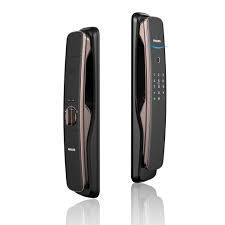
What is an electronic door lock?
With the advancement of Wi-Fi technology, electronic door locks have gradually become the top choice for security in modern homes and commercial spaces. Unlike traditional mechanical latches, electronic door locks use digital technology to enhance both security and convenience. Whether through passwords, fingerprints, or smartphone unlocking, electronic door locks not only provide efficient access control but also meet the needs of modern and intelligent homes.
In this article, we will analyze the main categories of electronic door locks in depth and help you understand how different types of electronic door locks can solve your security needs.
Main categories of electronic door locks
There is a wide variety of electronic door locks, each with its own features and suitable scenarios. Below are several main categories to help you gain a clearer understanding of the options available on the market.
1. Password-based electronic door locks
Features:
- Uses a password as the unlocking method
- Most support combination codes and one-time temporary passwords
- Particularly suitable for temporary visitors or rental property scenarios
Pros:
- No need to carry physical keys
- Passwords can be flexibly changed, offering high security
Cons:
- Passwords may be leaked or cracked
- If not entered for a long time, you might forget the password
Ideal for: Families seeking convenience, ideal for temporary guests or rental units.
2. Fingerprint electronic door locks
Features:
- Utilizes fingerprint recognition technology for unlocking
- Fast identification, usually unlocking within 1 second
Pros:
- Fingerprints are difficult to replicate, increasing security
- Eliminates the trouble of remembering passwords or carrying keys
Cons:
- Scratched or damp fingers may affect recognition accuracy
- Lower recognition rate for elderly people or children
Ideal for: Families or individuals seeking a high-tech feel and high security; suitable for home entrances with high-frequency use.
3. Smartphone-controlled electronic door locks
Features:
- Controls locking or unlocking via a mobile app
- Supports remote control and real-time notifications
Pros:
- Control the lock from anywhere, suitable for frequent travelers
- Manage multi-user permissions via the app
Cons:
- Reliance on the phone; may fail if the battery dies or signal is unstable
- Potential risk if the smartphone is hacked
Ideal for: Tech enthusiasts who value connectivity and remote management features.
4. Hybrid electronic door locks
Features:
- Simultaneously supports passwords, fingerprints, mobile app, and traditional keys
- Provides multiple choices and high flexibility
Pros:
- Ability to use the most suitable unlocking method for different situations
- Offers multiple backups, reducing risks if one method fails
Cons:
- More features usually result in a higher price
- Installation and maintenance can be more complex
Ideal for: High-end users who require comprehensive features and multiple backup options.
5. Facial recognition unlocking
Features:
- Uses advanced facial recognition technology for unlocking
- Fast, secure, and contactless
Pros:
- Especially convenient, as no physical contact with the device is required
- Faces are unique, enhancing security
Cons:
- High cost; accuracy may be affected in extreme lighting environments
- Potential privacy concerns
Ideal for: Users who pursue the latest technology and have high demands for privacy and hygiene.
6. RFID Smart Lock
Features:
- Uses proximity cards or devices (such as NFC) for unlocking
- Door opens upon approaching the sensor range
Pros:
- Simple operation; tap card to open
- Not affected by forgetting fingerprints or passwords
Cons:
- If an access card is lost, permissions must be reset
- Does not provide additional high-tech protection like facial recognition
Ideal for: Commercial settings, such as hotel rooms or corporate offices.
How to choose the right smart door lock?
When choosing an electronic door lock, you need to consider the following key factors:
- Security Requirements: For example, whether you need multiple backup unlocking methods.
- Usage Environment: Outdoor use requires consideration of weather resistance and durability.
- Target Users: If there are elderly people or children at home, choose a lock that is simple to operate.
- Budget Range: Prices vary greatly between different types, so balance your needs with your budget.
Future trends of electronic locks
With the rapid development of AI and IoT, electronic door locks will become even smarter in the future. For example:
- Deep integration into smart home systems, providing comprehensive security management.
- Incorporation of facial and emotion recognition, providing more personalized control and notification schemes.
- Improvement in energy efficiency to extend battery life and reduce maintenance costs.
Choosing a future of security and convenience
The electronic door lock is not only a trend but a revolution; it is changing our traditional perception of door locks and providing a more convenient and secure lifestyle. Whether you are looking for a high-tech feel, need higher security, or want to make your home life more intelligent, there is always an electronic door lock for you on the market.
Still hesitating? Contact Linko.Shop to start exploring various electronic door locks and find a new solution to improve your home security!
#Security #UnlockingModes #FingerprintScanning
Related Reading:
Related Keywords:
Electronic Door Locks | Smart Door Locks | Smart Locks | Smart Home Systems | Google Home | Digital Passcodes | Unlocking Methods
FAQ
What types of electronic door locks are there?
There are mainly six types: password-based, fingerprint-based, smartphone-controlled, hybrid, facial recognition, and RFID key card. Password locks are suitable for temporary visitors or rentals; fingerprint locks offer quick unlocking; hybrid locks provide multiple backup methods; and RFID is commonly used in commercial settings.
Are fingerprint locks reliable?
Fingerprints are difficult to replicate, providing high security with unlocking usually completed in under 1 second. However, scratches or moisture on the fingers can affect recognition, and the recognition rate may also be lower for the elderly and children. Families with such needs should consider hybrid door locks with multiple backup methods.
What should be considered when choosing an electronic door lock?
Consider four main factors: security requirements (whether multiple backup unlocking methods are needed), usage environment (outdoor units must be weather-resistant), the users (needs to be easy for the elderly and children to operate), and budget. LINKO Shop (linko.shop) has in-stock, official Hong Kong products.
