
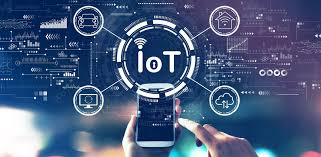
The Internet of Things (IoT) is a technology that connects various physical devices, sensors, software, and networks to enable intelligent interconnection. These devices can range from smart home appliances in homes to machinery in factories and even urban infrastructure. The core concept of the IoT is to connect the physical and digital worlds through the internet, enabling data collection, analysis, and application. This technological advancement enables automated operations without human intervention. The foundation of IoT technology is sensors and wireless communication. Sensors collect environmental data such as temperature, humidity, and light intensity, while wireless communication enables this data to be instantly transmitted to the cloud or other devices for processing. With the widespread adoption of 5G technology, the scope and efficiency of IoT applications have significantly increased. This technology has not only transformed our lifestyles but has also had a profound impact on various industries.
summary
- What is IoT technology?
- Internet of Things technology refers to connecting various objects through the Internet to collect, transmit and analyze information, thereby achieving intelligent control and management.
- Application scope of IoT technology
- The application scope of Internet of Things technology is wide, including smart home, smart city, smart medical care, smart transportation and other fields.
- How does IoT technology change our lifestyle?
- Internet of Things technology has changed people's lifestyles, making life more convenient and intelligent, but it has also brought some security and privacy issues.
- Advantages and disadvantages of IoT technology
- The advantages of IoT technology include improved efficiency, energy conservation and emission reduction, while the disadvantages include security risks and privacy leaks.
- The impact of IoT technology on enterprises
- The impact of IoT technology on enterprises includes improving production efficiency and reducing costs, while also bringing new business models and competitiveness.
Application scope of IoT technology
The application of IoT technology is extremely broad, encompassing a wide range of fields, from homes to industry, from healthcare to transportation. In homes, smart home devices such as smart light bulbs, smart thermostats, and smart security systems can be remotely controlled via mobile apps, improving living comfort and safety. In industry, IoT technology is used to monitor production processes and implement predictive maintenance for equipment, thereby reducing failure rates and operating costs. In healthcare, IoT technology enables remote health monitoring. Patients can wear smart bracelets or other wearable devices to monitor health indicators such as heart rate and blood pressure in real time, transmitting the data to doctors for analysis. This not only improves the efficiency of medical services but also enables patients to better manage their health at home. Furthermore, in the transportation sector, intelligent transportation systems leverage IoT technology to monitor traffic flow and optimize route planning, thereby reducing congestion and improving travel efficiency.
How does IoT technology change our lifestyle?
IoT technology is profoundly changing our lifestyles, making daily life more convenient and efficient. Take smart homes, for example. By connecting various home appliances, users can control their lights, air conditioners, and televisions through their phones or voice assistants. This convenience not only improves quality of life but also enables people to better manage their household energy consumption, thereby saving energy and reducing emissions. IoT technology is also revolutionizing social interaction. Many social media platforms and applications are integrating IoT features, allowing users to share their daily life data. For example, fitness trackers can record users' exercise data and share it with friends, which not only enhances social interaction but also motivates people to maintain a healthy lifestyle. With the further development of IoT technology, we can foresee that life will become even more intelligent and personalized in the future.
Advantages and disadvantages of IoT technology
The advantages of IoT technology primarily lie in its efficiency and convenience. First, it enables automated operations, reduces labor costs, and improves work efficiency. For example, in factories, IoT technology enables collaboration between devices, significantly improving production efficiency. Furthermore, IoT provides real-time data analysis, helping businesses make more informed decisions. However, IoT technology also has some disadvantages. First, security concerns. With a large number of devices connected to the internet, the risk of hacker attacks increases. Second, because it relies on data transmission and cloud storage, system failures or data loss can have a serious impact on business operations. Furthermore, as the number of devices increases, management and maintenance costs can also rise. Therefore, when promoting IoT technology, it is important to fully consider its potential risks.
The impact of IoT technology on enterprises
For businesses, IoT technology presents significant business opportunities and challenges. First, it enables businesses to better understand customer needs. By analyzing data from a variety of devices, businesses can gain in-depth insights into consumer behavior, enabling them to develop more targeted marketing strategies. For example, some retailers are using IoT technology to track customer behavior within stores to optimize merchandise displays and promotions. However, businesses also face challenges when adopting IoT technology, including high initial investments and technical integration issues. Many businesses need to upgrade existing systems to support new IoT devices. Furthermore, due to fierce market competition, businesses must continuously innovate to maintain a competitive advantage. Therefore, when promoting the application of IoT technology, companies need to develop a clear strategy that balances risks and benefits.
Security issues of IoT technology
As the number of IoT devices continues to grow, security issues are becoming increasingly prominent. Because these devices are often connected to the internet, they become potential targets for hackers. Successfully compromising a device can not only compromise personal privacy but also severely impact the entire system. For example, in 2016, a large-scale DDoS attack was launched via a large number of infected IoT devices, rendering several well-known websites inaccessible. To address this issue, governments and businesses around the world are increasing their focus on IoT security. Many companies are implementing encryption technologies to protect data transmission and are increasing device firmware updates to patch potential vulnerabilities. Furthermore, professional organizations are developing security standards for IoT devices to enhance overall security. However, due to the complexity of the IoT ecosystem, ensuring adequate security protection for all devices remains a daunting task.
Future development trends of IoT technology
Over the next few years, IoT technology will continue to develop rapidly, and its application scope will further expand. First, with the widespread adoption of 5G communication technology, IoT devices will be able to achieve faster and more stable data transmission. This will enable more applications that require immediate responses and high-frequency data exchange, such as self-driving cars and smart city infrastructure. Second, the integration of artificial intelligence (AI) and the IoT will become a significant trend. AI can help analyze the vast amounts of data collected from various devices, providing more intelligent decision support. For example, in agriculture, combining AI and IoT technologies can enable precision farming, increase crop yields, and reduce resource waste. Furthermore, with the development of edge computing technology, some data processing will be performed on-device, reducing latency and improving efficiency.
Environmental impact of IoT technology
IoT technology also has a profound impact on the environment. On the one hand, it can help us use resources more efficiently. For example, in energy management, smart meters can monitor electricity consumption in real time, allowing users to adjust their electricity usage based on their actual needs. Furthermore, in water resource management, by installing sensors to monitor water quality and levels, leaks can be detected and repaired promptly, effectively reducing water waste. On the other hand, with the widespread adoption of IoT devices, the environmental impact they pose cannot be ignored. The production and disposal of many electronic products generates significant amounts of electronic waste. If this waste is not properly handled, it can cause serious environmental pollution. Therefore, when promoting IoT technology, we need to consider its environmental impact and seek sustainable solutions.
Ethical issues of IoT technology
As IoT technology continues to develop, a series of ethical issues have gradually surfaced. Of particular concern is personal privacy. Since many IoT devices collect user data to provide services, balancing convenience with privacy protection is a crucial issue. For example, some smart home products may inadvertently record users' private conversations, posing a risk of privacy breaches. Furthermore, data ownership is a worthy ethical consideration. In many cases, user-generated data is collected and used by businesses for commercial purposes, but users may not receive corresponding returns or control over the data. Therefore, promoting IoT technology requires the establishment of appropriate laws and regulations to protect user rights and promote fair use.
The relationship between IoT technology and artificial intelligence
IoT technology and artificial intelligence (AI) are closely linked. AI can help analyze the vast amounts of data collected from various IoT devices, transforming this data into valuable insights. For example, in smart city development, analyzing traffic flow data can optimize traffic light control and improve road efficiency. Similarly, in industrial production, AI can perform predictive maintenance based on real-time data, effectively reducing failure rates. Furthermore, AI can enhance the intelligence of IoT devices themselves. For example, some smart home products have begun integrating voice assistants, allowing users to control various home devices through voice commands. This integration not only enhances the user experience but also makes daily life more convenient. Therefore, it is foreseeable that AI and the IoT will become even more closely integrated in the future, jointly driving technological advancement.
How to use IoT technology to improve the quality of life?
To effectively utilize IoT technology to improve quality of life, we need to address multiple aspects. First, within our homes, we can choose to install smart home systems, such as smart lighting, smart thermostats, and smart security systems. These systems not only improve living comfort but also help households save energy costs. For example, users can automatically adjust lighting brightness and indoor temperature based on their sleep and sleep schedules for optimal comfort. Second, in terms of health management, wearable devices such as smart bracelets or health monitoring devices can help us monitor our physical condition in real time. These devices often include features such as heart rate monitoring and sleep quality analysis, allowing users to understand their health status and make appropriate adjustments. Furthermore, some medical institutions are beginning to utilize remote monitoring systems, allowing patients to receive medical services at home, improving efficiency and reducing medical costs. Through these methods, we can fully leverage IoT technology to improve quality of life and make daily life more convenient, efficient, and healthy. In the future, we look forward to seeing more innovative applications that will further enhance our lifestyles.
FAQs
What is IoT technology?
Internet of Things technology refers to the technology that uses Internet connections between various sensors, devices and objects to enable them to communicate with each other and exchange data.
What are the application scenarios of IoT technology?
Internet of Things technology can be applied to various fields such as smart homes, smart cities, smart medical care, smart transportation, industrial automation, etc.
How does IoT technology work?
IoT technology collects data through sensors and devices, and then transmits the data to a cloud platform via the Internet for processing and analysis, ultimately achieving monitoring and control of objects.
What are the advantages of IoT technology?
Internet of Things technology can improve production efficiency, save energy, improve quality of life, and enhance urban management efficiency, and has broad application value.
What security risks does IoT technology pose?
Internet of Things technology has security risks such as data privacy leakage, system security vulnerabilities, and remote attacks, and corresponding security protection measures need to be strengthened.
