
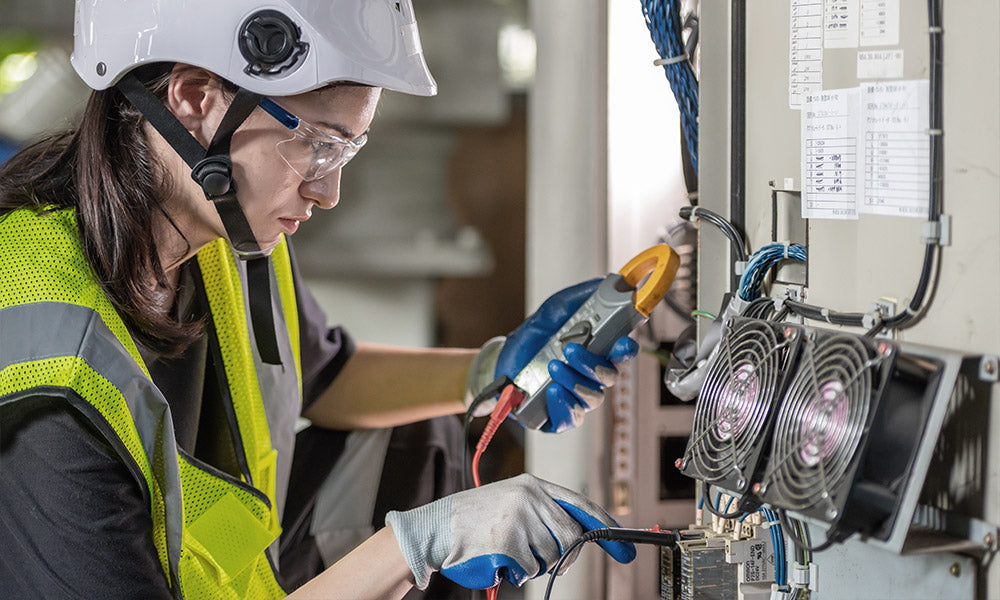
Three-phase switching is a widely used technology in power systems. Its fundamental principle is to leverage the characteristics of three-phase power to achieve efficient power distribution and control. Three-phase power consists of three AC currents with phases 120 degrees apart. This configuration provides a stable and balanced power supply. The core of the three-phase switching system lies in its ability to control the current flow of each phase through switching devices, enabling flexible management of the entire system. The selection and configuration of switchgear are crucial in three-phase switching. Common switch types include circuit breakers, contactors, and disconnectors. These switches not only switch current during normal operation but also quickly disconnect circuits in the event of a fault, protecting equipment and personnel. The design of the three-phase switching system takes into account multiple factors, including load characteristics, system stability, and fault protection, making it a valuable tool in various power systems.
summary
- The three-phase switch is a switch device that controls the three-phase current in the power system.
- The three-phase switching system plays an important role in the power system and can ensure the stable operation of the system.
- Three-phase switching can improve energy efficiency by increasing energy conversion efficiency
- The three-phase switching system has an important impact on the safety of the power system and can protect the system from failures.
- The three-phase switch system is widely used in power systems, industrial production, transportation and other fields, and has a wide range of application value.
The importance of three-phase switching in power systems
Three-phase switching plays a vital role in power systems, especially in industrial and commercial applications. Because three-phase power offers higher power density, it can more efficiently drive large motors and other heavy equipment than single-phase systems. This makes three-phase switching an indispensable component of factories, mines, and large commercial facilities. Furthermore, three-phase switching improves system reliability and stability. In many cases, a three-phase system can continue to operate even if a phase fails, something that single-phase systems cannot achieve. This redundant design not only reduces downtime but also improves overall production efficiency. Therefore, for industries that require uninterrupted power supply, three-phase switching is a crucial guarantee for ensuring production continuity.
How three-phase switching improves energy efficiency
Three-phase switching improves energy efficiency in several ways. First, the design of a three-phase system distributes current evenly across the phases, reducing energy losses in the conductors. Compared to single-phase systems, three-phase systems require smaller conductor cross-sectional area for the same power output, which not only reduces material costs but also eases installation and maintenance. Second, three-phase switching enables more precise load management. An intelligent control system dynamically adjusts the load on each phase based on actual demand, avoiding overloads and inefficient operation. For example, during peak demand periods, high-efficiency equipment can be prioritized, while unnecessary operation can be reduced during off-peak hours. This flexibility enables the entire power system to operate more efficiently, reducing energy consumption and operating costs.
The impact of three-phase switching on power system security
Safety is a primary consideration in any power system design, and the three-phase switching system excels in this regard. Its redundant design ensures that even if one phase fails, the other two phases can continue to supply power, significantly improving system reliability. Furthermore, three-phase switching systems are typically equipped with various protective devices, such as overload protection, short-circuit protection, and leakage protection. These devices can quickly cut off power supply in the event of a fault, preventing the incident from escalating. In practical applications, three-phase switching systems can also monitor current and voltage changes in real time through monitoring systems. Upon detecting an abnormality, the system automatically issues an alarm and initiates protective measures. This proactive protection mechanism not only promptly identifies potential risks but also effectively reduces the risk of harm to personnel and equipment. Therefore, selecting the appropriate three-phase switching system is a crucial step in ensuring safety when designing and operating power systems.
Application areas of three-phase switching system
Three-phase switching systems have a wide range of applications, encompassing industrial, commercial, and residential sectors. In the industrial sector, three-phase switching systems are primarily used to power large motors, transformers, and other heavy equipment. For example, in heavy industries such as steel mills and cement plants, large motors require a stable and efficient power supply, and three-phase switching systems meet this need. In the commercial sector, with the advancement of automation technology, more and more commercial facilities are adopting three-phase switching systems to improve operational efficiency. For example, in large supermarkets and shopping malls, lighting, air conditioning, and other equipment often require a stable power supply, and three-phase systems can effectively manage these loads. Furthermore, in residential areas, with the popularization of smart home technologies, three-phase switching systems are also gradually being adopted in homes to improve energy efficiency.
Technical characteristics of three-phase switching system
The three-phase switching system has several technical features that make it highly effective in various power systems. First, its simple structure and ease of maintenance are key. Because each phase in a three-phase system can be independently controlled, selectively disconnecting a phase during maintenance or overhaul can be done without disrupting the overall system. This flexibility significantly reduces maintenance costs and time. Second, the three-phase switching system offers excellent load adaptability. Under varying load conditions, the system automatically adjusts the output of each phase to maintain stable operation. For example, when the load is light, the output of a phase can be reduced, while automatically returning to normal levels when the load increases. This adaptive capability not only improves energy efficiency but also extends the life of the equipment.
Development trend of three-phase switching system
With the continuous advancement of technology, three-phase switchgear continues to evolve. Currently, a significant trend is towards intelligence and automation. Many new three-phase switchgear devices have integrated intelligent monitoring and control functions, which can collect and analyze data in real time to optimize operational efficiency. For example, some advanced control systems can predict load changes based on historical data and automatically adjust the output of each phase to achieve optimal operation. In addition, the rise of renewable energy technologies has also promoted innovation in three-phase switchgear. In renewable energy systems such as wind and solar power, how to effectively input unstable energy into the main power grid has become a challenge. The new generation of three-phase switchgear is developing towards higher efficiency and flexibility to adapt to the uncertainty of renewable energy and improve overall energy utilization.
Application of three-phase switching in renewable energy systems
With the increasing global demand for renewable energy, the use of three-phase switching in renewable energy systems is gaining increasing attention. In wind farms, wind turbines typically use three-phase inverters to convert wind energy into stable AC power. This process relies on efficient three-phase switching devices to control the direction and frequency of the current. Similarly, in solar power generation systems, photovoltaic inverters also use three-phase switching to convert DC power into AC power for connection to the main grid. These inverters often feature intelligent control capabilities that automatically adjust output power based on light intensity and load demand. Furthermore, three-phase switching is widely used in energy storage systems to enable efficient management of storage equipment and improve overall energy efficiency.
Environmental benefits of three-phase switching
Environmental benefits are an increasingly important aspect of society today, and three-phase switching systems demonstrate unique advantages in this regard. First, due to its efficient energy management capabilities, three-phase switching systems can significantly reduce energy consumption. This not only helps reduce carbon emissions but also reduces dependence on traditional fossil fuel resources, contributing to sustainable development. Second, the use of three-phase switching systems in renewable energy systems can promote the large-scale deployment of clean energy. As renewable energy technologies such as wind and solar power continue to mature, their generation costs are gradually decreasing. Efficient three-phase switchgear can better integrate these clean energy sources into the main power grid, improving the environmental friendliness of the overall energy mix. Therefore, in the future energy transition, three-phase switching systems will become a key force in promoting environmental protection.
Economic Benefits of Three-Phase Switching System on Power System
From an economic perspective, three-phase switching has brought significant economic benefits to power systems. First, its efficient operation significantly reduces operating costs. In industrial production, efficient power supply not only improves production efficiency but also reduces losses caused by downtime. Furthermore, due to the smaller cross-sectional area of the conductors, significant material cost savings can be achieved compared to single-phase systems. Second, with the increasing introduction of intelligent technologies, three-phase switching can further optimize operating strategies through data analysis and predictive models. For example, during peak power consumption periods, load distribution is automatically adjusted to avoid overloads, while during off-peak periods, unnecessary operations are reduced. This flexibility enables companies to quickly adjust production plans based on market demand, improve resource utilization, and maximize economic benefits.
Future Prospects of Three-Phase Switching
Looking ahead, three-phase switching systems will continue to evolve toward intelligent, green, and efficient systems. With the continued maturity of IoT and AI technologies, future three-phase switchgear will possess even more robust data processing and self-learning capabilities, enabling them to automatically adjust operating strategies based on real-time data to achieve optimal performance. Furthermore, with the global push for renewable energy, three-phase switching systems will become a crucial bridge connecting traditional and renewable energy sources. In the future, we can expect more innovative technologies to be integrated with three-phase switching systems to achieve more efficient, environmentally friendly, and cost-effective power supply solutions. In this process, continued advancement of technological research and development and application will be crucial to ensuring their long-term success.
FAQs
What is a three-phase switch?
A three-phase circuit breaker is a switching device used to control a three-phase circuit, commonly used in industrial and commercial applications. It can be used to open or close a circuit to control the flow of electricity.
What are the applications of three-phase switching system?
Three-phase switching is commonly used in the control systems of industrial equipment, mechanical equipment, motors, generator sets, transformers and other equipment.
What is the working principle of three-phase switching system?
The three-phase switching system controls the opening and closing of the circuit by controlling the switching elements in the three-phase circuit, such as electromagnetic contactors, circuit breakers or relays, thereby controlling the flow of power.
What types of three-phase switching systems are there?
Common three-phase switching systems include electromagnetic contactors, circuit breakers, relays, etc. Appropriate switching devices can be selected according to different application requirements and circuit characteristics.
What are the installation and maintenance precautions of three-phase switch system?
When installing a three-phase switch system, ensure that it complies with the corresponding safety standards and regulations, and be installed and maintained by professionals to ensure the safe and stable operation of the circuit.
