
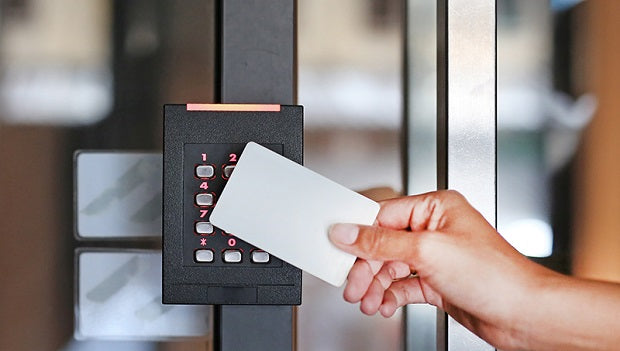
Access control systems are technologies used to control and manage access to specific areas. They are commonly used in commercial offices, factories, schools, and other locations requiring security management. These systems can provide authentication through a variety of methods, including passwords, cards, fingerprint recognition, facial recognition, and more. The primary purpose of access control systems is to ensure that only authorized personnel can enter specific areas, thereby improving security and preventing unauthorized access. With advances in technology, modern access control systems are more than just simple locks and keys, integrating various high-tech elements such as wireless communication, cloud storage, and smartphone applications. These systems can monitor access records in real time and provide detailed reports to help managers better understand personnel flow. The flexibility and scalability of access control systems make them a vital component of modern enterprise security management.
summary
- An access control system is a security system used to control access, usually using cards, passwords, or biometrics.
- Offices need access control systems to improve security, prevent unauthorized entry, and facilitate the management of employee entry and exit.
- Choosing the right access control system requires considering the size of your company, your budget, and your security needs. You can choose a system based on cards, passwords, or biometrics.
- The steps to install an access control system include planning the system configuration, installing the hardware, setting the software parameters and testing the system operation.
- The management and monitoring of access control systems requires regular updates of employee information, monitoring of system operation status, and timely handling of abnormal situations.
Why do offices need access control systems?
The main reasons offices need access control systems are security and management efficiency. First, access control systems effectively prevent unauthorized access to office areas, thereby protecting company confidential information and assets. With the increasing informatization of businesses, data leaks and theft are becoming increasingly common, making the need for security protection even more urgent. Access control systems provide a secure environment where employees can focus on their work without worrying about external threats. Second, access control systems can improve office management efficiency. By real-time monitoring of people entering and leaving, managers can keep track of employee attendance and use this data to optimize human resource allocation. Furthermore, many access control systems offer report generation and data analysis capabilities, helping companies better formulate security policies and management measures. These features not only enhance office security but also facilitate daily business operations.
Choosing the right access control system
Choosing the right access control system requires considering multiple factors, including the company's size, industry characteristics, and specific needs. First, the company should choose a system appropriate for its size. A small business may only require a simple card recognition system, while a larger enterprise may require a more complex multi-factor authentication system. Furthermore, different industries have different security requirements. For example, the financial industry has higher data protection requirements, necessitating the use of more advanced technology. Secondly, companies should also consider the system's scalability and compatibility. As a business grows, it may need to add new access points or upgrade existing systems, making it crucial to choose a scalable access control system. Furthermore, the system should be able to seamlessly integrate with other security devices, such as surveillance cameras and fire alarms, for comprehensive security management. This not only improves security but also reduces the cost of future upgrades and maintenance.
Steps to install access control system
Installing an access control system typically involves several key steps. First, businesses need to conduct a needs analysis to determine the location, type, and required functionality of the access control system. This phase typically involves collaborating with a professional security company to ensure the most appropriate solution is selected. Following the needs analysis, the design phase follows, involving the development of an installation plan and the selection of appropriate hardware. During the installation process, technicians will perform the actual installation according to the design plan, including wiring, installing card readers, locks, and other related equipment. After installation, system testing is required to ensure that all functions are functioning properly. Management should be involved during the testing phase to identify any issues and make adjustments promptly. Finally, before the system is officially put into operation, employee training is required to familiarize them with the new system's operational procedures.
Management and monitoring of access control systems
Managing and monitoring access control systems is crucial to ensuring their effective operation. First, companies should designate a dedicated person to oversee the day-to-day management of the access control system, including creating and deleting user accounts and setting permissions. This ensures that only authorized personnel have access to specific areas and that user information is promptly updated to reflect personnel changes. Real-time monitoring is also a crucial component of access control system management. Many modern access control systems offer real-time monitoring, allowing users to access entry and exit records and alert information at any time via mobile phone or computer. This not only helps detect anomalies promptly but also provides crucial evidence for subsequent investigations. Regularly generating reports and analyzing data can help companies assess the effectiveness of their security policies and make adjustments based on actual circumstances.
How to use access control system effectively
To effectively utilize access control systems, companies need to establish clear usage guidelines and procedures. First, a comprehensive user management system should be established, including user application, review, training, and logout procedures. This ensures that all users understand the importance of the access control system and its operating procedures, thereby reducing security risks caused by improper operation. Secondly, companies should regularly evaluate and optimize their access control systems. With the continuous advancement of technology, new access control technologies are constantly emerging. Therefore, companies should stay updated with market trends to promptly update and upgrade existing systems. Furthermore, employee feedback can be collected to identify issues encountered during system usage and, based on this feedback, make improvements to enhance the overall user experience.
Access control system maintenance and care
Access control system maintenance and upkeep are crucial to ensuring its long-term stable operation. First, businesses should regularly inspect hardware equipment, including card readers, locks, and power supplies, to ensure proper functioning. Any equipment failures or anomalies should be promptly repaired or replaced to avoid compromising overall security. Furthermore, software updates are required regularly to fix vulnerabilities and improve performance. Many access control system vendors release updates regularly, so businesses should maintain good communication with their vendors to stay up-to-date. All maintenance activities should also be logged for future reference and analysis.
Technical updates and upgrades of access control systems
With the continuous advancement of technology, access control systems are also evolving. New technologies such as biometrics, wireless communications, and cloud services are gradually replacing traditional access control methods. For example, fingerprint and facial recognition technologies have become integral components of many high-end access control systems, providing enhanced security and convenience. When considering an upgrade, companies should evaluate whether the existing system meets current needs and whether there are future expansion requirements. If the existing system cannot support new technologies or meet growing security needs, an upgrade may be necessary. Furthermore, when selecting new technologies, compatibility with existing equipment should be considered to avoid incurring additional costs due to upgrades.
Costs and Benefits of Access Control Systems
Investing in an access control system requires a balance between cost and benefit. Initial investment includes hardware purchases, installation fees, and software licensing, while ongoing maintenance and upgrades also incur certain expenses. However, these costs are often negligible compared to the potential losses from a security incident. A data breach or asset theft not only results in direct financial losses but can also impact a company's reputation and customer trust. Furthermore, access control systems can improve work efficiency. For example, automated personnel management can reduce the time required for manual registration, allowing employees to focus more on core business operations. Furthermore, data analysis can optimize human resource allocation and improve overall operational efficiency. Therefore, when evaluating an access control system, it's important to consider not only the immediate costs but also the long-term benefits.
Common problems and solutions of access control systems
Companies may encounter common problems when using access control systems. For example, a user's card may be lost or damaged, preventing them from accessing a specific area. In such cases, companies should have a comprehensive contingency plan, including a quick card replacement process and temporary access rights. Regular employee training to enhance employee awareness of how to handle emergencies is also crucial. Another common problem is system failure or malfunction. In such cases, companies should maintain good communication with the vendor to obtain timely technical support. They may also consider establishing an in-house technical support team to quickly resolve minor issues. Furthermore, regular equipment inspection and maintenance can effectively reduce failure rates and improve overall operational stability.
Future development trend of access control systems
In the future, access control systems will become increasingly intelligent and automated. As artificial intelligence (AI) technology matures, many access control systems will begin integrating AI algorithms to achieve more efficient personnel identification and risk prediction. For example, historical data analysis can be used to predict potential risks and proactively implement measures. Furthermore, automation will make access control management more convenient, with features like automatic report generation and intelligent reminders becoming standard. Furthermore, the widespread adoption of IoT technology will enable greater levels of information sharing and collaboration among various devices. Future access control systems may seamlessly integrate with other security devices, such as surveillance cameras and fire alarms, to create a comprehensive, secure, and efficient intelligent environment. Furthermore, with the growing emphasis on data privacy, the next generation of access control systems will also place greater emphasis on user data protection to comply with relevant laws and regulations.
FAQs
What is an access control system?
An access control system is a security system used to control access to a specific area. It typically includes access card readers, access controllers, and management software.
How does an access control system work?
Access control systems usually use access cards or passwords to identify authorized personnel. When an authorized person passes the access card reader or enters the correct password, the access controller unlocks the access control device and allows them to enter a specific area.
What are the application scenarios of access control systems?
Access control systems are widely used in office buildings, schools, hospitals, factories, shopping malls and other places to manage personnel entry and exit, improve security and management efficiency.
What are the advantages of access control systems?
Access control systems can improve security and prevent unauthorized persons from entering specific areas. They can also record entry and exit times for easier management and monitoring.
How to choose a suitable access control system?
When choosing an access control system, you need to consider factors such as the size of the venue, personnel flow, security requirements, and select suitable access control card readers, access control controllers, and management software.
